
投稿日: 9月 17, 2026 - 29 ビュー

スマートグラステクノロジーの風景は根本的な変革を遂げています。メーカーやブランドがますます高度なウェアラブル体験の提供を急ぐ中、エッジAIは市場のリーダーとフォロワーを分ける重要な差別化要因として浮上しています。中国でスマートグラスのOEM/ODMパートナーシップを探す企業にとって、オンプレミス処理能力をることは、技術的な好奇心ではなく戦略的なビジネス上の必要条件へと移行しています。
従来のスマートグラスは、AI搭載の機能を提供するためにクラウド接続に大きく依存していました。ユーザーはコマンドを話し、远程サーバーへの送信を待ち、要求を処理し、結果を受け取るという手順を踏んでいました。このアプローチは遅延を引き起こし安定したインターネット接続への依存を生み出し、データのプライバシーに関する正当な懸念提起しました。エッジAIは、人工知能の処理をデバイス自体に直接持ち込むことで、このアーキテクチャを根本的に再設計します。
スマートグラスにおけるエッジAIアーキテクチャの理解
エッジAIとは、人工知能アルゴリズムをネットワークエッジに位置するハードウェアに直接展開することを指します。この場合、スマートグラス自体の中に組み込むことを意味します。音声コマンド、視覚データ、 生体情報を処理のためにクラウドサーバーにストリーミングする代わりに、エッジAIによりこれらの計算がウェアラブルデバイス内で瞬時に実行されます。このアーキテクチャの移行により、応答時間の劇的な改善、帯域幅要件の削減、接続条件に関係なくユーザーにシームレスな体験を提供することが可能になります。
スマートグラeschップセットに埋め込まれた最新のニューラル処理ユニット(NPU)は、エネルギー効率を維持しながら注目すべき計算密度を達成しています。これらの specialized processorsは、CPUベースの従来のアプローチに必要な電力のほんの一部を使用して、機械学習推論演算を実行します。その結果は、リアルタイム言語翻訳、コンピュータビジョン分析、自然言語処理などの複雑なタスクを実行可能なデバイスであり、消費者使用に許容されるバッテリー寿命を維持しながら実装できます。
ハンズフリーコミュニケーションアプリケーションへの影響を考えてみましょう。エッジAI対応のスマートグラスを装着した営業プロフェッショナルは、受信メッセージを音声読み上げで聞く、口述筆記で応答を作成、返信を送信、すべて電話に触れることなく、また cloud servicesに明示的に接続することなく行えます。 entire interaction loopはデバイス上でローカルに実行され、ユーザーに瞬時に感じられる100ミリ秒未満の応答時間を提供します。
オンプレミス知性を動かす技術コンポーネント
スマートグラスにおけるエッジAIの実装には、複数のハードウェアとソフトウェアコンポーネントの慎重な統合が必要です。コアにはシステムオンチップ(SoC)アーキテクチャがあり、伝統的なプロセッサコアと、AI workloads specifically designed for専用の specialized neural processing unitsを組み合わせています。これらのNPUは、ニューラルネットワーク推論のバックボーンを形成するマトリックス演算とテンソル操作に優れています。
メモリアーキテクチャも equally crucial. Edge AI models require rapid access to both model parameters and input data. LPDDR memory solutions provide the necessary bandwidth while maintaining power efficiency suitable for wearable form factors. Storage solutions based on eMMC or UFS standards accommodate the increasing size of sophisticated AI models while enabling fast loading times.
センサーfusionは another critical capability. Modern smart glasses typically incorporate multiple sensing modalities—cameras, microphones, accelerometers, gyroscopes, and sometimes additional biosensors. Edge AI systems must coordinate these diverse data streams, performing temporal alignment and cross-modal inference to generate meaningful outputs. A fitness-focused device might combine heart rate data, motion patterns, and location information to provide contextual coaching without requiring cloud connectivity.
B2B調達意思決定のための戦略的利点
スマートグラスの製造パートナーを評価する調達チームにとって、エッジAI capabilities translate directly into measurable business advantages. Products featuring robust on-device processing command premium positioning in the market, enabling brands to justify higher price points while delivering genuine user value rather than simply adding unnecessary connectivity.
Data privacy concerns have become increasingly prominent in consumer electronics. Companies that position Edge AI-enabled products can market genuine privacy benefits—user data remains on the device, processed locally, never transmitted to external servers unless explicitly requested. This differentiator resonates strongly with enterprise buyers evaluating smart glasses for field service, healthcare, or security applications where data handling regulations create compliance challenges.
Reliability engineering benefits flow naturally from Edge AI architectures as well. Products that function independently of cloud service availability deliver more consistent user experiences. Network outages, service disruptions, or API changes cannot degrade functionality for devices that operate autonomously. Manufacturing partners who have mastered Edge AI implementation provide their clients with products that perform reliably across diverse deployment environments.
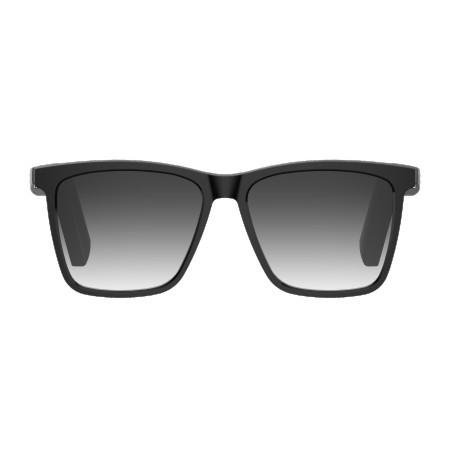
エッジAIスマートグラスの製造の卓越性
エッジAI対応のスマートグラスを生産するには、従来の電子機器アセンブリを大幅に超える製造 expertise. Quality standards must account for the unique challenges posed by wearable AI systems, including thermal management, power optimization, and form factor constraints that leave minimal room for error.
Thermal considerations prove particularly critical. Neural processing units generate significant heat during intensive inference operations. In a device worn on the face, this heat cannot accumulate without causing user discomfort. Manufacturing processes must ensure efficient heat dissipation through careful component placement, thermal interface material application, and enclosure design that facilitates convective cooling. Our manufacturing facility implements rigorous thermal validation protocols for every Edge AI product we produce, ensuring consistent performance across all operating conditions.
Power delivery architecture requires similar attention. Edge AI workloads present dynamic power demands that fluctuate based on processing complexity. A device performing simple voice command recognition draws far less power than one executing real-time object detection. Manufacturing processes must implement robust power management systems capable of responding to these rapid changes without introducing noise or instability that could corrupt AI operations.
ウェアラブル展開のためのモデル最適化技法
The path from research AI models to deployable Edge AI systems involves significant optimization. Neural networks developed in research environments typically assume abundant computational resources and operate with 32-bit floating-point precision. Deploying such models directly on wearable hardware would require excessive memory, consume unacceptable power, and produce sluggish response times.
Quantization addresses these challenges by reducing numerical precision. Converting 32-bit floating-point weights to 8-bit integer representations shrinks model size by approximately 75% while maintaining acceptable accuracy for most applications. More aggressive quantization approaches achieve even greater compression but require careful validation to ensure resulting outputs meet application requirements.
Pruning techniques remove redundant connections within neural networks, eliminating parameters that contribute minimally to final outputs. A network trained with thousands of parameters can often be compressed dramatically while preserving essential functionality. Knowledge distillation takes a different approach, training smaller student networks to replicate the behavior of larger teacher models.
Architecture optimization specifically designs neural networks for efficient execution on target hardware. Hardware-aware neural architecture search identifies network configurations that maximize performance on specific NPU implementations. These specialized architectures exploit hardware capabilities like dedicated matrix multiplication units or optimized data pathways to achieve superior efficiency compared to general-purpose designs.
| 最適化技法 | サイズ削減 | パフォーマンス向上 | 精度への影響 |
|---|---|---|---|
| 量子化(FP32からINT8) | 4分の1 | 2〜3倍高速 | 1%未満の損失 |
| プルーニング | 5〜10分の1 | 1.5〜2倍高速 | 1〜3%の損失 |
| 知識蒸留 | 3〜5分の1 | 2〜3倍高速 | 最小限の損失 |
| ハードウェア対応NAS | 多様 | 2〜5倍高速 | アプリケーションに依存 |
接続モードとクラウドハイブリッドアプローチ
While Edge AI enables impressive autonomous capabilities, smart glasses rarely operate in complete isolation. Contemporary product architectures typically implement hybrid approaches that combine on-device processing with selective cloud connectivity when beneficial. Understanding these modes helps B2B buyers evaluate how specific products balance local intelligence with connected services.
Always-off operation represents the purest Edge AI implementation. Devices function entirely independently, performing all AI operations locally without any network connectivity. This mode suits applications where privacy, reliability, or regulatory compliance prevent cloud data transmission. Some specialized industrial or healthcare deployments mandate this architecture for data sovereignty or safety reasons.
Connect-on-demand modes enable cloud fallback for operations that exceed local capabilities. A device might handle routine voice commands locally while streaming complex natural language queries to cloud services for processing. This approach provides graceful scalability—devices can offer sophisticated features when connectivity exists while degrading gracefully to basic functionality when networks are unavailable.
Background sync modes continuously exchange data with cloud services while maintaining primary functionality locally. Wearables might download updated AI models, synchronize user preferences, or upload analytics data without interrupting active use. Users experience seamless operation while the device maintains cloud synchronization in the background.
最新のAI capabilities without permanent cloud dependency require our Smart Glasses WiFi Call Glasses demonstrate sophisticated hybrid architectures that balance local processing with on-demand connectivity.
エッジAI製品の製造パートナーの評価
B2B buyers should assess several dimensions when evaluating smart glasses manufacturing partners for Edge AI products. Technical competency in AI model optimization and deployment represents the foundational requirement. Partners must demonstrate understanding of quantization, pruning, and architecture optimization techniques—not merely familiarity with buzzwords but demonstrated capability to produce deployable solutions.
Hardware partnerships reveal supplier relationships that influence product capabilities and supply chain reliability. Manufacturers with established relationships with leading AI silicon vendors gain earlier access to advanced chipsets, better pricing, and deeper technical support. These relationships translate into competitive advantages for clients seeking differentiated products.
Quality assurance processes for AI-enabled products require specialized testing regimes beyond traditional electronics validation. Partners must validate not only basic functionality but also AI accuracy, model behavior across edge cases, and graceful degradation under adverse conditions. Testing protocols should simulate real-world usage scenarios including variations in lighting, acoustic environments, and user behavior patterns.
Regulatory expertise varies significantly across manufacturing partners. Markets including the European Union, United States, and specific industries impose requirements on AI systems that affect product compliance. Partners with demonstrated experience navigating these regulatory landscapes provide valuable guidance during product development.
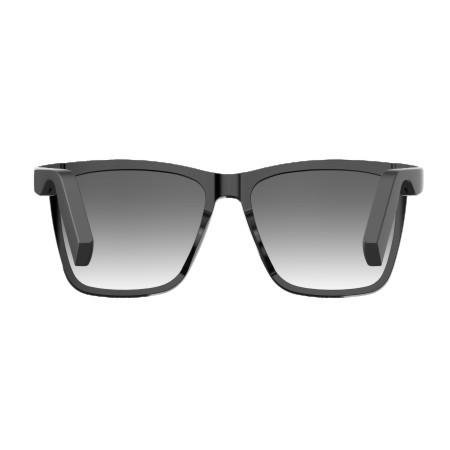
スマートアイウェアにおけるエッジAIの将来動向
The capabilities of Edge AI in smart glasses continue advancing rapidly. Chip manufacturers have announced roadmaps targeting order-of-magnitude improvements in neural processing efficiency within the next few product generations. These improvements will enable increasingly sophisticated AI capabilities in wearable form factors while maintaining acceptable battery life and thermal characteristics.
Model architecture innovations contribute similarly to progress. Researchers continue developing more efficient neural network designs that achieve equivalent accuracy with reduced computational requirements. Techniques like sparse attention mechanisms, mixture-of-experts architectures, and efficient transformer variants promise to expand the frontier of what local processing can accomplish.
Federated learning approaches may enable new product categories where devices improve through collective experience without compromising individual privacy. Multiple users' devices could collaborate to enhance AI models while keeping training data distributed rather than centralized. This paradigm aligns naturally with Edge AI architectures and could enable products that genuinely improve through use.
スマートグラスのラインに関する戦略的意思決定
B2B decision-makers evaluating smart glasses investments should position Edge AI capabilities as core requirements rather than optional features. The competitive landscape increasingly rewards products that deliver intelligent experiences reliably and privately. Partners who have invested in Edge AI expertise and manufacturing infrastructure provide strategic advantages that compound over time.
Product roadmaps should account for rapid capability evolution. Products shipping today will face competition from next-generation devices within twelve to eighteen months. Manufacturing partners who maintain active AI research engagement and hardware ecosystem relationships position their clients to iterate competitive products continuously.
Volume considerations influence Edge AI implementation economics significantly. Higher production volumes justify greater investment in model optimization and custom AI development. Partners capable of scaling from initial deployment through high-volume production provide valuable continuity and learning curve advantages.
エッジAI capabilitiesがどのように差別化できるかをご検討の場合,我们的 engineering team works directly with B2B partners to translate AI requirements into manufacturable products. 初期のコンセプトから大量生産まで、 ambitious specifications into market-ready realityにtransformする技術力と製造インフラを提供します。 Contact our team to discuss your Edge AI smart glasses requirements and discover how our manufacturing capabilities can accelerate your market entry.
