
Posted At: Jun 08, 2026 - 1,239 Views

In recent years, the intersection of corrective vision technology and wearable electronics has created unprecedented opportunities for brands, distributors, and businesses seeking to enter the rapidly expanding smart eyewear market. Prescription lens inserts represent a critical innovation that bridges the gap between functional vision correction and cutting-edge smart glass technology, making this category accessible to billions of vision-wearers worldwide.
For B2B buyers evaluating smart glasses OEM and ODM manufacturing partnerships, understanding the engineering, materials, and market dynamics behind prescription lens inserts is essential for making informed sourcing decisions. This guide provides a deep dive into the technical considerations, manufacturing capabilities, and commercial opportunities that define this evolving sector.
Why Prescription Lens Compatibility Matters in Smart Eyewear
The global smart glasses market has experienced substantial growth, driven by advances in augmented reality, audio integration, and health monitoring capabilities. However, a significant barrier to adoption has been the limited availability of options for people who require prescription corrective lenses. Industry data suggests that approximately 64% of adults worldwide need some form of vision correction, representing a massive underserved segment of the potential market.
Prescription lens inserts solve this problem by providing a modular solution that allows smart eyewear manufacturers to serve both prescription and non-prescription wearers without requiring entirely separate product lines. This approach offers several strategic advantages for brands and distributors:
- Expanded addressable market reach covering the majority of adult consumers
- Reduced inventory complexity through universal smart frame designs
- Enhanced product accessibility and customer satisfaction
- Competitive differentiation in an increasingly crowded market
Engineering Behind Prescription Lens Insert Systems
The technical implementation of prescription lens inserts requires careful coordination between optical engineering, mechanical design, and electronics integration. Modern smart glasses with prescription insert compatibility typically employ one of several architectural approaches.
Magnetic Attachment Systems
The most common solution involves precision-engineered magnetic mounting points within the smart glasses frame. Prescription lens carriers—typically made from lightweight titanium alloy or high-grade polymer—attach securely to the interior surface of the frame using embedded neodymium magnets. This approach allows users to easily install their custom prescription lenses while maintaining full functionality of the smart glass components.
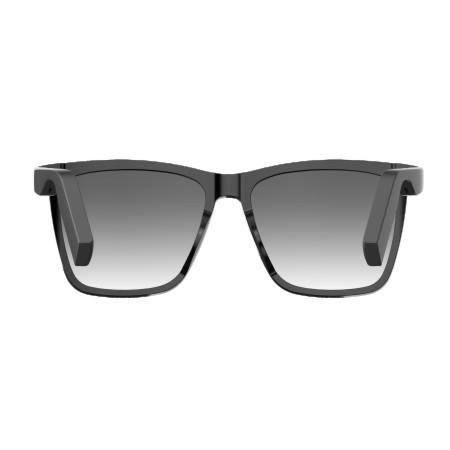
Our Bluetooth Call Sunglasses utilize advanced magnetic attachment systems that accommodate prescription lens inserts without compromising structural integrity or aesthetic design.
Slide-In Cartridge Designs
For applications requiring rapid lens replacement or multiple prescription options, slide-in cartridge designs offer an elegant solution. These systems feature precision-machined channels within the frame temples or bridge that accept standardized prescription lens carriers. The cartridge approach is particularly popular in industrial and professional smart eyewear applications where users may need to switch between different corrective prescriptions throughout the workday.
Integrated Frame Systems
The most sophisticated approach involves smart glasses frames designed from the ground up to incorporate prescription lenses as an integral component. These systems typically feature custom-machined lens cavities that accept Rx lenses cut to exact specifications. While more complex to manufacture, integrated systems offer superior optical alignment and reduced overall thickness compared to add-on insert solutions.
Materials Science in Prescription Smart Eyewear
Material selection plays a pivotal role in the performance, comfort, and manufacturability of prescription-compatible smart glasses. B2B buyers should understand how different material choices impact both production costs and end-user satisfaction.
Frame Materials
Modern smart glasses frames serving prescription insert applications commonly utilize:
| Material | Advantages | Typical Applications |
|---|---|---|
| Grilamid TR90 | Lightweight, durable, hypoallergenic | Consumer lifestyle eyewear |
| Titanium Alloy | Exceptional strength-to-weight ratio, premium feel | Premium and professional segments |
| Carbon Fiber Composite | Ultra-lightweight, high rigidity | Sports and active wear segments |
| Beta Titanium | Flexible, corrosion-resistant, formable | Fashion-forward designs |
Optical Materials
The prescription lenses themselves require careful material selection to balance optical clarity, impact resistance, and weight. High-index polycarbonate remains the most popular choice for smart glass applications due to its inherent impact resistance and lightweight properties. Premium applications may utilize Trivex or high-index optical resins that offer superior optical performance at reduced thickness.
Our Eye Protection Bluetooth Sunglasses incorporate advanced optical materials that meet stringent safety standards while maintaining compatibility with prescription insert systems.
Manufacturing Process Considerations for OEM Partners
When evaluating smart glasses manufacturing partners for prescription lens insert products, B2B buyers should assess several critical manufacturing capabilities and quality control processes.
Precision Molding and Machining
Smart glasses frames require injection molding tolerances within ±0.05mm to ensure consistent fit between the frame and prescription lens inserts. Our manufacturing facilities utilize computer-controlled machining centers and multi-cavity precision molds to achieve the tight tolerances necessary for reliable magnetic attachment and slide-in cartridge systems.
Electronics Integration
The integration of electronic components—speakers, microphones, sensors, and batteries—within prescription-compatible frames presents unique challenges. Engineers must account for the space occupied by lens insert hardware while maintaining proper component placement for optimal audio quality, touch control accessibility, and weight distribution. Our production lines employ advanced FPC (flexible printed circuit) routing techniques and miniaturized component selection to maximize internal volume utilization.
Quality Assurance Protocols
Robust quality control is essential for prescription smart eyewear, where fit and function directly impact user safety. Key inspection points include:
- Frame dimensional verification using coordinate measuring machines
- Lens insert retention force testing for magnetic and mechanical attachment systems
- Optical alignment verification for integrated display systems
- Water resistance testing to IPX4 or higher standards
- Accelerated lifecycle testing for hinge durability and frame flex memory
Market Applications and Industry Verticals
Prescription-compatible smart eyewear serves diverse market segments, each with distinct requirements and growth trajectories.
Healthcare and Medical
The healthcare sector represents a significant opportunity for prescription smart glasses, particularly in surgical assistance, remote consultation, and patient monitoring applications. Medical professionals who require prescription correction can now leverage heads-up display technology without compromising their vision needs. Our Android Fashion Bluetooth Smart Glasses platform provides a foundation for healthcare-specific customizations.
Enterprise and Industrial
Industrial environments demand ruggedized prescription-compatible smart eyewear that can withstand harsh conditions while providing workers with real-time information overlay, remote expert assistance, and hands-free documentation capabilities. These applications typically require reinforced frame designs, enhanced impact resistance, and compatibility with standard safety eyewear specifications.
Consumer Lifestyle
The consumer market for prescription-compatible smart glasses spans audio sunglasses, fitness tracking eyewear, and fashion-forward smart accessories. These products emphasize style, comfort, and seamless integration of smart features without drawing attention to the underlying technology. The audio sunglasses category has seen particularly strong growth as consumers seek alternatives to traditional earbuds for music and calls.
Design for Manufacturability: Best Practices
Successful prescription smart eyewear products require close collaboration between brand designers and manufacturing partners from the earliest stages of product development. Several design principles can significantly impact manufacturing efficiency and product quality.
Modular Architecture
Adopting a modular design philosophy allows brands to develop a family of products around shared frame platforms while offering customization through interchangeable components. This approach reduces tooling investments, simplifies inventory management, and accelerates time-to-market for new variants.
Tolerance Stacking Analysis
When combining mechanical frames, electronic assemblies, and optical components, designers must account for tolerance stacking—the cumulative effect of dimensional variations across multiple parts. Our engineering teams perform comprehensive tolerance analysis during the design phase to identify potential interference issues and optimize fits for assembly and function.
Serviceability Considerations
Prescription lens inserts must be replaceable without damaging the smart glass electronics or frame finish. Design features that facilitate easy lens replacement—including tool-free access mechanisms and protective coatings on contact surfaces—enhance product longevity and customer satisfaction.
Cost Factors and Pricing Considerations
Understanding the cost structure of prescription-compatible smart glasses helps B2B buyers develop accurate pricing strategies and margin targets.
Component Cost Drivers
Several factors contribute to the overall manufacturing cost of prescription smart eyewear:
| Factor | Impact on Cost | Mitigation Strategy |
|---|---|---|
| Frame tooling | High initial investment | Platform sharing across variants |
| Lens insert hardware | Moderate per-unit | Volume procurement of magnets, carriers |
| Electronics assembly | Variable based on features | Feature optimization for target segment |
| Quality testing | Fixed per unit | Inline inspection optimization |
| Custom packaging | Variable | Standard packaging with branding |
Total Cost of Ownership
B2B buyers should consider total cost of ownership beyond unit manufacturing costs, including prototyping expenses, certification fees, shipping logistics, and potential costs associated with product returns or warranty claims. Our team provides comprehensive cost modeling during the quotation phase to support accurate business planning.
Sourcing Strategy: Working with Smart Glasses Manufacturers
Selecting the right manufacturing partner is critical to success in the prescription smart eyewear market. Key evaluation criteria include technical capabilities, quality systems, communication efficiency, and production capacity.
Technical Capability Assessment
Evaluate potential partners on their ability to support the full product lifecycle, from concept development through mass production and after-sales support. Specific technical questions should address their experience with prescription lens integration, electronics miniaturization, and applicable safety certifications such as CE, FCC, and optical performance standards.
Sample and Prototype Services
Reputable manufacturers should offer prototype services that allow brands to validate design concepts before committing to production tooling. Our facility provides iterative prototyping with progressive refinement, enabling rapid design validation and optimization of prescription lens integration systems.
Scalability and Lead Times
Understanding a manufacturer's production capacity and typical lead times helps ensure supply chain reliability as order volumes grow. Our production facilities combine automated assembly lines with skilled craftspeople to balance throughput with the quality inspection requirements specific to smart eyewear products.
The Path Forward: Prescription Smart Eyewear Opportunities
The prescription lens insert category represents a compelling growth opportunity for brands, distributors, and businesses entering or expanding in the smart eyewear market. By combining the universal appeal of vision correction with increasingly sophisticated smart features, prescription-compatible products address a substantial unmet need in the current market.
Success in this category requires thoughtful product design, reliable manufacturing partnerships, and clear understanding of target segment requirements. Our engineering and production teams specialize in supporting B2B partners throughout the product development journey, from initial concept through global distribution.
Ready to explore prescription-compatible smart eyewear manufacturing for your brand? Our team welcomes inquiries about customization options, volume pricing, and development timelines. Share your product specifications and market objectives, and our specialists will provide detailed consultation on feasible approaches and competitive timelines.
