
Posted At: Jun 23, 2026 - 2,399 Views

When sourcing smart glasses for your brand or retail business, understanding lens technology separates informed buyers from those who leave quality to chance. The optical components in smart eyewear represent the most technically complex—and often most expensive—elements of the device. This guide breaks down every critical lens term and technology you need to know before placing your first OEM order.
Understanding Waveguide Technology in Smart Glasses
Waveguide technology forms the backbone of augmented reality smart glasses, enabling digital content to overlay onto the real world. Unlike traditional displays that project light directly to your eyes, waveguides guide light through a series of microscopic structures etched into the lens material.
The technology relies on total internal reflection, where light bounces within the waveguide material until it reaches specifically designed output couplers. These couplers redirect the light toward your pupil, creating the illusion that digital content exists in your physical environment. Major manufacturers like Microsoft HoloLens and Magic Leap pioneered this approach, though newer waveguide designs have become significantly thinner and more stylish.
For B2B sourcing purposes, waveguide technology splits into three primary categories: surface relief gratings, volume holographic gratings, and diffractive optical elements. Each offers distinct advantages in terms of field of view, color reproduction, and manufacturing complexity. When evaluating suppliers, ask specifically about their waveguide sourcing—many smaller manufacturers import pre-made waveguides rather than producing them in-house.
Field of View: The Numbers That Matter
Field of view (FOV) measures how much of your visual space the smart glasses can fill with digital content. Early AR glasses offered just 15-20 degrees of FOV, feeling like viewing content through a small window. Current generation devices push toward 40-50 degrees, creating a more immersive experience where digital objects feel present rather than floating at the edge of vision.
For commercial applications, FOV requirements vary dramatically. Industrial maintenance applications often work fine with narrower FOV since workers primarily need notifications and hands-free instructions. Gaming and entertainment applications demand wider fields to create genuine immersion. Consumer communication glasses sit somewhere in the middle, prioritizing aesthetics over maximum immersion.
Best Bluetooth Smart Glasses 2024 models showcase how manufacturers balance FOV against lens thickness and battery life. The relationship between these variables creates the fundamental trade-offs that define each product category.
Lens Materials: Beyond Standard Glass
Smart glasses require specialized lens materials that accommodate electronics while maintaining optical clarity. Polycarbonate remains the most common choice for budget-friendly models due to its impact resistance and lightweight properties. However, polycarbonate scratches easily and tends to distort colors, making it unsuitable for premium product lines.
High-index plastics offer better optical performance in a thinner profile, though they require additional coatings to achieve adequate scratch resistance. These materials typically appear in mid-range smart glasses where designers prioritize aesthetics without reaching flagship price points.
Premium smart glasses increasingly incorporate glass elements for superior optical performance, particularly for polarized lenses or specialized coatings. Glass provides the best color accuracy and scratch resistance but adds weight and manufacturing complexity. Some manufacturers combine materials—using plastic for the frame-integrated electronics section and glass for the optical insert.
Transmittance and Tint Technology
Transmittance describes how much light passes through the lens, expressed as a percentage. Clear lenses offer 85-90% transmittance, while fully tinted lenses might transmit only 15-20% of available light. Smart glasses for outdoor use typically incorporate photochromic technology that automatically darkens in response to UV exposure.
For B2B buyers, transmittance specifications affect both user experience and regulatory compliance. Sunglasses intended for driving must meet minimum transmittance requirements in most jurisdictions—lenses too dark create safety hazards. Smart sunglasses designed for sports applications often use category 3 tinting (blocking 82-92% of light) for maximum glare reduction.
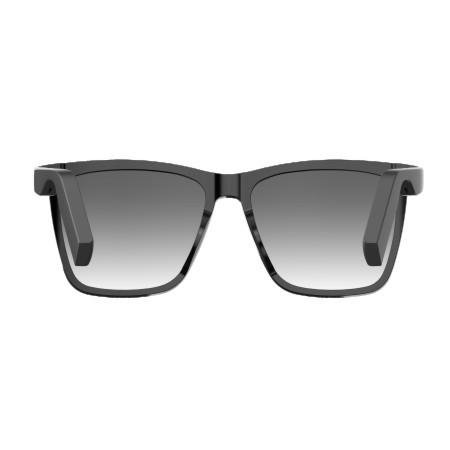
Polarized lenses add another dimension to smart glasses functionality. The polarization filter blocks horizontally reflected light—the glare from water, roads, and snow—while allowing vertically polarized useful light to pass through. For smart glasses targeting driving, fishing, or outdoor sports markets, polarization represents a key differentiator that justifies premium pricing.
Display Technologies: From LCOS to MicroLED
The actual image generation in smart glasses relies on several competing display technologies, each with distinct characteristics. LCOS (Liquid Crystal on Silicon) has dominated AR glasses for years, offering good color reproduction and relatively simple manufacturing at moderate resolution. Current LCOS panels in smart glasses achieve 720p or 1080p resolution per eye, sufficient for text notifications and basic graphics.
MicroLED represents the cutting edge, offering higher brightness, better contrast ratios, and lower power consumption than LCOS alternatives. Apple Vision Pro uses MicroLED for its external display, though the technology remains expensive for consumer-priced products. Samsung and other manufacturers have announced MicroLED smart glasses, suggesting mainstream availability within the next few years.
Waveguide-based displays require micro-displays—tiny projection engines that generate the image fed into the waveguide. These components significantly impact the overall device thickness, weight, and cost structure. Understanding which micro-display technology a supplier uses helps predict the final product's performance envelope.
Prescription Lens Compatibility
Vision correction represents a major barrier to smart glasses adoption. Users who require prescription eyewear often cannot wear standard smart glasses without additional solutions. Forward-thinking manufacturers address this through several approaches.
Insert frames allow prescription lens carriers to snap inside the smart glasses frame. This approach maintains the original device aesthetics while accommodating most prescriptions. However, the added layer reduces optical quality and adds thickness.
Custom prescription waveguides represent the premium solution, with the prescription integrated directly into the optical element. This maintains optimal optical performance but dramatically increases per-unit cost and extends production timelines. Only high-end manufacturers offer this capability.
Magnitude alignment determines whether prescription inserts must be custom-ground for each user or whether adjustable optics can accommodate a range of prescriptions. For B2B buyers designing product lines, prescription compatibility strategy significantly affects market positioning.
Coatings and Surface Treatments
Modern smart glasses incorporate multiple coatings beyond basic tinting. Anti-reflective (AR) coatings reduce light bounce off the lens surface, improving contrast and reducing eye strain. Quality AR coatings add 5-15% to light transmission while eliminating distracting reflections.
Hydrophobic and oleophobic coatings repel water and oils, respectively, keeping lenses cleaner and making them easier to maintain. These coatings prove particularly valuable for smart glasses used in fitness applications where sweat and movement create cleaning challenges.
Blue light filtering has become increasingly important as users spend more time looking at screens. Some smart glasses incorporate blue light blocking into the lens material itself, while others use dedicated filter coatings. The effectiveness varies significantly between manufacturers.
IPD and Fit Considerations
Interpupillary distance (IPD) measures the space between a user's pupils. This measurement critically affects display alignment—if the projected image doesn't align with your pupils, the visual experience suffers dramatically. Consumer smart glasses typically accommodate IPD ranges from 55mm to 75mm through adjustable mechanisms.
Fixed IPD designs work for products targeting specific demographics, such as sports glasses for adult men (typically 63-65mm average) or children's smart glasses. Variable IPD accommodations add manufacturing cost but broaden market applicability.
Beyond IPD, nose pad adjustability, temple arm pressure, and overall weight distribution determine long-term wearing comfort. Industrial use cases requiring all-day wear demand different fit characteristics than consumer glasses used primarily for notifications and calls.
Manufacturing Quality Indicators
When evaluating smart glasses manufacturers, certain quality indicators reveal production maturity. Edge-to-edge optical bonding—the seamless connection between the display element and the lens—separates premium products from budget alternatives. Poor bonding creates visible seams and reduces contrast.
Waveguide uniformity testing should appear in any quality assurance documentation. Variations in the diffraction grating create uneven brightness across the field of view, producing a ghosting effect that frustrates users. Reputable manufacturers test every unit; others sample only.
Temperature cycling validation proves optical components maintain performance across operating ranges. Smart glasses face environmental stress from storage in hot vehicles to cold outdoor use. Inferior optical elements can delaminate or experience permanent clarity loss after temperature extremes.
Cost Drivers in Smart Glasses Lenses
Understanding what drives lens costs helps B2B buyers evaluate quotes and negotiate effectively. Waveguide complexity represents the largest variable—geometric waveguides cost less than holographic alternatives but often provide narrower field of view or reduced color accuracy.
Resolution requirements scale costs directly. Moving from 720p to 1080p per eye roughly doubles display-related expenses. 4K resolution remains impractical for consumer-priced products due to both cost and power consumption.
Customization level significantly impacts unit economics. Standard frame and lens options allow manufacturers to carry inventory and reduce per-unit costs. Custom colors, logos, or frame shapes require new tooling and longer production runs, increasing minimum order quantities and per-unit pricing.
Certification Requirements for Smart Glasses Lenses
Different markets impose varying certification requirements on smart glasses. CE marking allows European sale, requiring documented compliance with optical safety standards. FDA registration is mandatory for US market entry, with specific requirements around light emission and electrical safety.
Optical safety testing verifies that display elements don't emit harmful light levels. LED-based displays require particular attention to blue light emissions and potential photobiological hazards. Reputable manufacturers provide test reports for all major markets.
Water and dust resistance ratings (IP ratings) have become expected features for smart glasses. IPX4 provides splash resistance suitable for casual use; IP67 enables full immersion protection for sport-focused products. Higher ratings add cost but expand use case versatility.
Choosing the Right Smart Glasses Partner
Successful smart glasses sourcing requires finding manufacturers with demonstrated optical expertise rather than general electronics assemblers. Ask potential partners about their optical engineering staff, testing equipment, and quality management systems specific to lens production.
Sample quality provides the clearest window into manufacturing capability. Order samples before committing to production runs, and evaluate them under varied lighting conditions. Pay attention to color consistency between left and right lenses—mismatched optical elements indicate process control problems.
Smart Bluetooth Audio Glasses represent an accessible entry point for brands exploring the category, offering balanced features without premium pricing. Building a relationship with manufacturers through established product lines before requesting custom development reduces risk and establishes communication patterns.
Future Trends in Smart Glasses Optics
The smart glasses optical landscape continues evolving rapidly. Variable focus optics will soon allow users to naturally focus on virtual objects at different distances, reducing the eye strain that currently limits usage sessions. This technology requires sophisticated eye tracking and adaptive optics—capabilities that premium manufacturers are actively developing.
Holographic waveguide improvements promise thinner, lighter designs with wider fields of view. Meta and other major technology companies are investing heavily in this space, suggesting consumer prices will drop as manufacturing scales.
Electrochromic lenses allow users to adjust tint darkness electronically rather than relying on photochromic automatic responses. This control appeals to users who want instant darkening for bright conditions or full clearing for indoor use.
Making Your Sourcing Decision
Understanding optical technology fundamentals empowers you to evaluate smart glasses offerings intelligently. Whether you're launching a new product line or expanding existing offerings, the lens remains the defining component that determines user satisfaction and return rates.
Document your optical requirements clearly before approaching manufacturers. Define minimum acceptable field of view, transmittance ranges, and resolution targets. This preparation prevents scope creep during development and establishes clear acceptance criteria for samples.
The smart glasses market continues maturing, with optical technology leading innovation. Partners who invest in understanding these fundamentals position themselves advantageously as demand grows across consumer, enterprise, and industrial segments.
Cycling Sunglasses demonstrate how specialized optical requirements—impact resistance, wide coverage, and polarized performance—shape product development. Applying this specialized thinking to your specific market segment ensures the smart glasses you source will genuinely meet customer expectations.
Ready to explore smart glasses manufacturing partnerships? Request quotes from manufacturers with demonstrated optical expertise and transparent quality processes. The right partner transforms your product vision into devices that users will trust for daily wear.
