
Posted At: Aug 12, 2026 - 22 Views

The smart glasses market has reached a pivotal inflection point in 2026. After years of experimental launches and incremental improvements, the industry has matured into a viable commercial category with clear use cases, proven manufacturing capabilities, and growing demand across enterprise and consumer segments. For B2B buyers, distributors, and brands exploring opportunities in this space, understanding the current landscape is essential for making informed sourcing and partnership decisions.
Market Overview and Growth Trajectory
The global smart glasses market has experienced accelerated growth throughout 2025 and into 2026, driven by advancements in display technology, battery efficiency, and processor miniaturization. Industry analysts estimate the market will surpass $12 billion by the end of 2026, representing a compound annual growth rate that outpaces many adjacent consumer electronics categories.
China remains the dominant manufacturing hub for smart glasses, accounting for approximately 78% of global production volume. This concentration reflects the country's established supply chains for optical components, mature electronics manufacturing ecosystem, and competitive labor dynamics that make Chinese OEM partnerships attractive for brands at every scale.
The market has diversified significantly beyond early augmented reality headsets. Today's smart glasses categories include audio sunglasses, call-enabled eyewear, sports-focused devices with biometric tracking, and specialized solutions for driving, cycling, and industrial applications. Each segment presents distinct opportunities for buyers seeking differentiated products.
Technology Trends Shaping 2026
Display and Optics Innovations
Waveguide technology has achieved meaningful cost reductions, making heads-up displays more accessible for mid-range products. MicroLED arrays have emerged as the preferred display solution for new releases, offering improved brightness and energy efficiency compared to earlier LCOS implementations. Manufacturers can now achieve adequate visual clarity for notifications, navigation overlays, and basic AR experiences without the bulk and expense that characterized first-generation devices.
Lens technology has advanced concurrently. Manufacturers now offer polarized options, automatic tint adjustment, and blue light filtering as standard features rather than premium upgrades. UV protection has become table stakes for any sunglasses-formfactor device. The convergence of smart functionality and optical quality means buyers no longer need to compromise on vision correction or sun protection when selecting smart eyewear.
Audio Engineering Improvements
Directional audio technology has matured considerably, enabling open-ear listening experiences that don't require earbuds. Bone conduction and air conduction speakers positioned in the temple arms deliver clear sound while maintaining awareness of environmental noise—a critical safety feature for cycling, driving, and outdoor activities. The latest generation of Bluetooth Smart Audio Sunglasses for Cycling demonstrates how manufacturers have refined this balance, producing devices that deliver quality audio without isolation.
Microphone arrays have improved dramatically, with beamforming technology enabling clear voice capture even in moderately noisy environments. This advancement has expanded the viability of call functionality across use cases, from professional driving applications to outdoor fitness activities. The integration of noise cancellation algorithms at the firmware level has become standard practice among quality manufacturers.
Power Management and Battery Life
Battery technology remains the most significant constraint on smart glasses capabilities. However, 2026 has seen meaningful progress in power efficiency. New chipsets from leading semiconductor suppliers consume approximately 40% less power than their predecessors while delivering comparable processing capability. Combined with more efficient display drivers and optimized Bluetooth implementations, manufacturers can now achieve 8-12 hours of moderate use from compact battery cells that don't compromise frame aesthetics or comfort.
The industry has also standardized on USB-C charging with support for fast charging protocols. Some manufacturers have introduced magnetic connector solutions for quick top-ups during use, particularly for sports-oriented products designed for extended activity sessions.
Product Category Analysis
The smart glasses market has fragmented into distinct categories, each with specific feature requirements and target demographics. Understanding these segments helps B2B buyers identify the most promising opportunities for their markets.
| Category | Key Features | Growth Rate | Target Segment |
|---|---|---|---|
| Audio Sunglasses | Open-ear audio, UV protection, touch controls | High | Outdoor enthusiasts, commuters |
| Call-Enabled Eyewear | Hands-free calling, noise cancellation, professional styling | Moderate-High | Business professionals, delivery drivers |
| Sports & Fitness | Biometric tracking, water resistance, secure fit | High | Athletes, fitness enthusiasts |
| AR Display Glasses | Heads-up display, notification overlay, navigation | Emerging | Enterprise, tech early adopters |
Manufacturing Landscape and OEM/ODM Opportunities
Chinese smart glasses manufacturers have invested heavily in production capabilities over the past three years. Many facilities now operate dedicated smart eyewear production lines with automated testing, quality control systems, and assembly processes refined for the unique requirements of wearable electronics.
The distinction between OEM and ODM partnerships has become increasingly important for B2B buyers. OEM arrangements involve manufacturers producing devices based on buyer-provided designs, while ODM partners contribute their own reference designs that buyers can customize through branding, color variations, and feature modifications. Both models have advantages depending on buyer capabilities and market positioning strategy.
Minimum order quantities have decreased across the industry as manufacturers seek to accommodate smaller brand launches and market testing. While high-volume orders still yield the best unit economics, buyers can now establish partnerships with order sizes that were impractical just two years ago. This flexibility has lowered barriers for distributors and emerging brands entering the market.
Water Resistance and Durability Standards
IPX ratings have become a critical specification for smart glasses, particularly in sports and outdoor categories. The industry has largely standardized on IPX4 (water splashing from any direction) as a minimum threshold, with premium products achieving IPX5 or higher for sweat resistance during intense activities.
Manufacturers have developed proprietary sealing techniques to protect electronic components while maintaining the aesthetic requirements of fashion-forward eyewear. These advances have enabled products like the Anti-sweat Sports Glasses line, which deliver reliable performance under conditions that would damage earlier-generation devices.
Beyond water resistance, manufacturers have addressed durability through strengthened frame materials, scratch-resistant lens coatings, and reinforced hinge mechanisms. The goal has been to create devices that can serve as everyday wearables rather than fragile electronics requiring careful handling.
Design Evolution and Fashion Integration
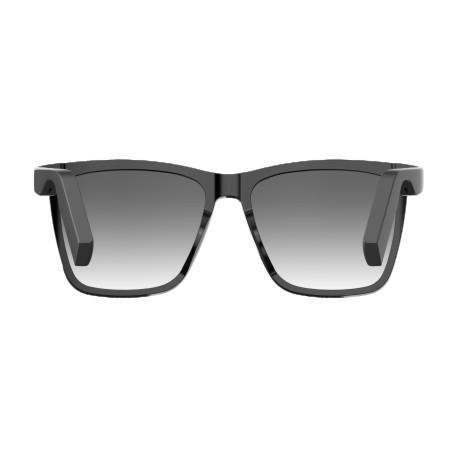
The days of clunky, tech-forward designs that telegraph their electronic nature have largely passed. Current smart glasses emphasize aesthetic refinement, with many products indistinguishable from conventional premium eyewear at casual glance. Manufacturers have learned that commercial success requires addressing the fashion concerns that initially limited adoption.
Frame materials have diversified to include traditional acetate, lightweight titanium, TR90 nylon composites, and aluminum alloys. Multiple frame shapes—round, square, aviator, cat-eye—allow brands to address different style preferences within their target demographics. The ability to customize temples, end pieces, and lens shapes while maintaining internal component compatibility has become a key differentiator among manufacturers.
Collaborations between electronics manufacturers and established eyewear brands have accelerated design quality improvements. These partnerships bring optical expertise, fashion sensibility, and brand credibility that pure-play electronics manufacturers often lack. For B2B buyers, accessing these design capabilities through OEM/ODM partnerships offers a pathway to premium positioning.
Connectivity and Smart Integration
Bluetooth 5.3 has become the connectivity standard for smart glasses, offering improved range, lower power consumption, and enhanced support for multipoint connections. Users can now maintain simultaneous connections to smartphones and other devices without the pairing frustrations that characterized earlier implementations.
Voice assistant integration has matured, with seamless support for Siri, Google Assistant, and Alexa depending on user preference and regional availability. Touch controls on temples and bridge surfaces provide alternative interaction methods, with gesture recognition expanding to include tap patterns, swipe sequences, and head movement detection in advanced implementations.
Application ecosystems have developed to enable customization of smart glasses behavior. Users can configure notification preferences, adjust audio settings, update firmware, and access usage analytics through companion smartphone applications. For B2B buyers, this software infrastructure represents both an opportunity for branded experiences and a complexity that requires careful vendor evaluation.
Regional Market Dynamics
North American and European markets have shown strongest demand for premium smart glasses with comprehensive feature sets. Enterprise adoption has accelerated, particularly in logistics, field service, and healthcare applications where hands-free information access delivers measurable productivity gains. Consumer demand in these regions skews toward audio sunglasses and call-enabled eyewear for active lifestyles.
Asian markets present different dynamics, with stronger interest in entry-level and mid-range products that balance smart features with accessible pricing. China itself has become a significant consumer market, with domestic brands competing effectively against international entrants. Southeast Asian markets are emerging as growth opportunities as smartphone penetration and consumer electronics purchasing power continue increasing.
Latin American and African markets remain nascent but show early signs of potential as infrastructure development and consumer awareness improve. B2B buyers targeting these regions should consider pricing sensitivity and feature prioritization that differs from established markets.
Strategic Considerations for B2B Buyers
Partner selection requires careful evaluation of manufacturing capabilities, quality management systems, and communication processes. The smart glasses category demands specialized expertise that not all electronics manufacturers possess. Buyers should verify experience specifically with eyewear-formfactor electronics, including familiarity with optical requirements, ergonomic considerations, and regulatory compliance for eye-related products.
Intellectual property protection deserves explicit attention in partnership agreements. Design files, firmware, software customizations, and proprietary technologies require clear ownership terms and confidentiality provisions. Chinese manufacturers have varying policies on these matters, and B2B buyers should establish mutual understanding before engaging in detailed product development.
Supply chain resilience has become a priority following recent global disruptions. Buyers should evaluate manufacturer component sourcing strategies, buffer inventory practices, and alternative supplier relationships. Products like the IPX4 Waterproof Music Glasses exemplify how manufacturers have addressed demand for reliable, weather-resistant devices through careful component selection and testing protocols.
Looking Ahead: Emerging Opportunities
Artificial intelligence integration represents the next frontier for smart glasses. On-device AI processing enables real-time translation, computer vision for object recognition, and contextual information overlays that enhance the wearable experience. The convergence of efficient neural processing units and advanced microphone systems creates opportunities for voice-first interaction models that feel natural and unobtrusive.
Health monitoring capabilities are expanding beyond basic fitness tracking. Researchers and manufacturers are exploring blood oxygen monitoring, UV exposure tracking, and even basic glucose measurement through optical sensors integrated into eyewear. While regulatory pathways for medical claims require careful navigation, the underlying sensor technologies continue advancing.
Enterprise applications will drive significant category growth as organizations recognize the productivity and safety benefits of hands-free information access. Warehouse operations, field service, healthcare, and logistics are early adoption segments with clear ROI justification. B2B buyers positioned to serve these markets with purpose-built products can capture premium margins unavailable in commodity consumer segments.
Conclusion
The smart glasses industry in 2026 presents compelling opportunities for B2B buyers, distributors, and brands willing to engage with this evolving category. Market maturity has reduced entry barriers while manufacturing capabilities have expanded to support diverse product requirements and price points.
Success in this market requires thoughtful partner selection, clear product positioning, and realistic expectations about technology capabilities. The gap between expectation and delivery has narrowed considerably, but smart glasses remain a category where quality varies significantly across manufacturers. Working with established partners who demonstrate consistent quality and reliable communication separates successful market entries from costly missteps.
Our team at Smart Glasses Factory specializes in connecting B2B buyers with manufacturing capabilities matched to their specific requirements. Whether you're launching a new product line, expanding an existing portfolio, or exploring opportunities in specialized segments like Bluetooth Call Glasses, we provide the expertise and production capacity to support your objectives.
Ready to explore smart glasses manufacturing partnerships? Contact our team to discuss your requirements, request samples, or schedule a facility tour. We'll help you identify the optimal path from concept to market-ready product.
