
Posted At: Nov 17, 2026 - 145 Views

In the fast-paced world of modern logistics, warehouse operators face mounting pressure to increase efficiency, reduce errors, and accelerate order fulfillment cycles. Traditional manual processes—which often rely on paper-based systems, handheld scanners, and clipboard documentation—are proving insufficient for meeting the demands of today's omnichannel retail environment. Enter smart glasses for warehouse applications: a game-changing technology that is fundamentally transforming how industrial workers interact with information, equipment, and each other.
Smart glasses represent a significant leap forward in logistics technology. These wearable devices combine advanced optics, wireless connectivity, and powerful computing capabilities into a lightweight, hands-free form factor that warehouse personnel can wear throughout their shifts. From inventory management and order picking to quality control and maintenance support, smart glasses are proving indispensable across virtually every facet of warehouse operations.
Why Warehouse Operators Are Adopting Smart Glasses
The decision to implement smart glasses in warehouse environments stems from several compelling business drivers. First and foremost is the need for improved accuracy in order fulfillment. Studies consistently show that manual picking processes produce error rates between 1% and 3%, resulting in costly returns, customer dissatisfaction, and operational inefficiencies. Smart glasses equipped with warehouse management system (WMS) integration can guide workers through picking sequences step-by-step, dramatically reducing errors and ensuring that the right items reach the right destinations.
Beyond accuracy, smart glasses deliver substantial gains in worker productivity. When employees can access real-time inventory data, navigate warehouse layouts, and document activities—all without using their hands or leaving their workstations—they accomplish tasks faster and more efficiently. Industry benchmarks indicate productivity improvements of 15% to 30% following smart glasses implementation, with some facilities reporting even more dramatic results.
Training represents another area where smart glasses deliver exceptional value. New employee onboarding traditionally requires significant time investment from experienced workers who must shadow newcomers through orientation processes. With smart glasses, instructional content, procedural guides, and expert assistance become instantly accessible through the device's display. Remote experts can see what the trainee sees and provide real-time guidance, effectively compressing learning curves and reducing the burden on senior staff members.
Key Features of Industrial-Grade Smart Glasses
Not all smart glasses are created equal, and this distinction becomes particularly critical in warehouse environments where durability, reliability, and usability determine whether the technology succeeds or fails. Industrial-grade smart glasses for warehouse applications must incorporate several essential features.
Optical Performance and Display Quality
Workers in warehouses often transition between indoor and outdoor environments throughout their shifts. Quality optics ensure that information remains visible across varying lighting conditions. High-resolution displays with adjustable brightness allow workers to read picking instructions, scan barcodes, and view inventory details without straining their eyes or stopping to adjust device settings. Some models offer polarized lenses for glare reduction—particularly valuable in facilities with large loading docks and skylights.
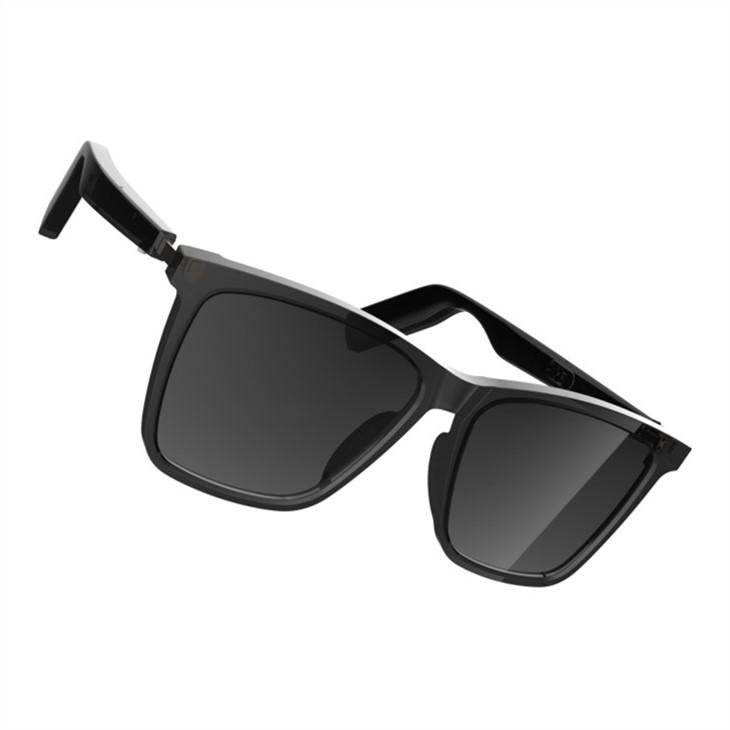
UV protection capabilities matter significantly for warehouse personnel who work near loading docks, in outdoor staging areas, or in facilities with significant natural light exposure. The Anti-ultraviolet Sunglasses UV400 line demonstrates how manufacturers address these requirements, providing industrial users with eye protection that doesn't compromise on technology integration.
Audio Integration and Voice Capabilities
Hands-free operation ranks among the most valued features in warehouse smart glasses. Workers frequently have their hands occupied with boxes, pallets, or picking equipment, making traditional computing interfaces impractical. Integrated audio systems enable voice commands, verbal confirmations, and ambient communication while maintaining full situational awareness. Directional speakers project sound toward the wearer's ears without isolating them from their physical environment—an essential safety consideration in busy warehouse settings.
The Bluetooth Audio Glasses available through our manufacturing platform exemplify this audio-first approach, providing clear sound delivery while keeping workers aware of surrounding activity. These devices support seamless integration with warehouse management systems, allowing voice-driven inventory queries, picking confirmations, and communication with supervisors.
Connectivity and Computing Power
Modern warehouse smart glasses must maintain reliable connections to central systems throughout large facilities. Bluetooth 5.0 technology provides the range, stability, and power efficiency necessary for all-day operation across expansive warehouse footprints. Low-latency connections ensure that information displayed to workers reflects current inventory states without perceptible delays that could disrupt workflows.
The Bluetooth 5.0 Smart Glasses manufactured by our partners incorporate these connectivity standards, enabling real-time synchronization with WMS platforms and providing workers with instant access to the information they need.
Durability and Comfort
Warehouse environments are demanding. Smart glasses must withstand dust, moisture, temperature variations, and the occasional impact without compromising functionality. Industrial designs emphasize robust construction with reinforced frames, scratch-resistant lenses, and IP-rated environmental protection. Simultaneously, comfort considerations ensure that workers can wear devices throughout full shifts without experiencing fatigue or discomfort. Lightweight materials, balanced weight distribution, and adjustable fit mechanisms address these ergonomic requirements.
Real-World Applications in Logistics Operations
Smart glasses serve multiple functions within warehouse and logistics operations. Understanding these applications helps procurement professionals identify the most relevant features and specifications when evaluating smart glasses for their specific operational requirements.
Pick-to-Light and Pick-to-Voice Operations
Traditional pick-to-light systems require infrastructure investment in overhead lighting, sensors, and controls. Smart glasses offer a more flexible alternative, overlaying visual cues directly in the worker's field of view. When approaching a storage location, the glasses highlight the correct bin, display the quantity to pick, and confirm the action once completed. Voice recognition allows workers to verbally confirm picks or report discrepancies without breaking their workflow stride.
Receiving and Putaway Processes
Incoming shipments present documentation challenges that smart glasses can resolve elegantly. Workers scan barcodes on arriving items, with relevant information appearing immediately in the display. System-guided putaway instructions direct workers to optimal storage locations based on item velocity, size, and compatibility with existing inventory. Discrepancies between expected and received quantities trigger immediate alerts, enabling rapid resolution before items enter the general inventory pool.
Cycle Counting and Inventory Audits
Regular inventory accuracy verification requires systematic counting processes that traditional methods make time-consuming and error-prone. Smart glasses guide workers through counting sequences, automatically recording counts and flagging variances for investigation. The ability to photograph conditions, annotate discrepancies, and attach documentation directly to inventory records creates comprehensive audit trails without requiring separate data entry processes.
Maintenance and Repair Support
Warehouse equipment—from conveyor systems to automated guided vehicles—requires regular maintenance and occasional repair. Smart glasses enable maintenance technicians to access technical documentation, view exploded diagrams, and receive remote guidance from specialists without stopping work to search through manuals or await on-site assistance. This capability proves particularly valuable for facilities using third-party maintenance services or managing equipment across distributed locations.
Quality Control Inspections
Quality assurance processes benefit significantly from smart glasses implementation. Inspection checklists appear on-screen, guiding workers through systematic examinations while recording results automatically. Photographic documentation of defects or concerns attaches directly to order records, providing clear evidence for returns processing and supplier communication. Integration with quality management systems ensures that inspection data flows seamlessly into broader operational analytics.
Technical Specifications That Matter for Warehouse Deployment
When evaluating smart glasses for warehouse applications, procurement teams should pay particular attention to specifications that directly impact operational effectiveness.
| Specification | Importance for Warehouse Use | Recommended Ranges |
|---|---|---|
| Battery Life | Full-shift operation without charging interruptions | 8+ hours continuous use |
| Weight | Comfort during extended wear | Under 50 grams for eyewear-style devices |
| Bluetooth Range | Coverage across large warehouse facilities | 30+ meters line of sight |
| Ingress Protection | Resistance to dust and moisture | IP54 or higher for general warehouse use |
| Operating Temperature | Reliability in varying environmental conditions | -10°C to 45°C range |
| Drop Specification | Durability in industrial environments | Minimum 1.2-meter drop resistance |
Sourcing Smart Glasses for Industrial Applications: The China Manufacturing Advantage
B2B buyers seeking smart glasses for warehouse applications increasingly turn to Chinese manufacturers for several strategic reasons. Understanding these advantages helps procurement professionals make compelling cases for their sourcing decisions.
Manufacturing Scale and Specialization
China's electronics manufacturing infrastructure represents the world's most extensive concentration of production capability for wearable technology. Contract manufacturers in the Pearl River Delta and Yangtze River Delta regions have invested billions of dollars in surface mount technology lines, optical assembly facilities, and quality control infrastructure specifically optimized for smart glasses production. This manufacturing density creates competitive dynamics that drive innovation while maintaining cost structures unavailable in other regions.
Component Access and Supply Chain Integration
Smart glasses require sophisticated component assemblies—displays, cameras, sensors, batteries, and wireless modules—that Chinese manufacturers source through deeply established supply chains. Proximity to component suppliers reduces lead times and enables more responsive production scheduling. When specifications change or demand fluctuates, Chinese factories can adjust component orders faster than competitors dependent on longer supply routes.
OEM/ODM Capabilities and Customization
Original Equipment Manufacturer (OEM) and Original Design Manufacturer (ODM) relationships give B2B buyers unprecedented control over product specifications, branding, and feature sets. Whether sourcing standard platforms and applying custom branding or commissioning entirely new designs to meet specific operational requirements, Chinese manufacturers offer engagement models flexible enough to accommodate virtually any procurement strategy. Smart Audio Glasses Wireless Bluetooth represent just one example of the customizable platforms available through these manufacturing relationships.
Cost Structure Advantages
Labor costs, while rising, remain significantly lower in China's manufacturing regions than in developed economies. Combined with optimized production processes, automated assembly, and favorable economies of scale, these factors enable Chinese manufacturers to offer competitive pricing without sacrificing quality. For B2B buyers managing large-scale deployments across multiple facilities, per-unit cost differences translate directly to substantial budget savings.
Evaluating Smart Glasses Manufacturers: Key Considerations
Not all Chinese manufacturers deliver equivalent value, and distinguishing between partners requires careful evaluation across several dimensions.
Quality Management Systems
Reputable manufacturers maintain ISO 9001 certification or equivalent quality management systems that provide frameworks for consistent production and continuous improvement. Beyond certification, examine quality control processes, testing protocols, and defect rates to understand how manufacturers ensure product reliability.
Industrial Experience
Experience with industrial applications specifically indicates manufacturer familiarity with the demanding requirements warehouse environments impose. Ask about previous deployments in logistics, manufacturing, or similar settings, and request case studies or references where available.
Support Infrastructure
Post-sale support becomes critically important for enterprise deployments. Evaluate warranty terms, repair processes, spare parts availability, and technical support access before committing to manufacturing partnerships.
Communication and Transparency
Successful B2B relationships require clear communication across cultural and geographical distances. Assess manufacturer responsiveness, language capabilities, and transparency regarding production status, challenges, and timelines during the evaluation process.
The Future of Smart Glasses in Logistics
Smart glasses adoption in warehouse and logistics operations continues accelerating as technology improves and success stories accumulate. Emerging capabilities including advanced augmented reality overlays, artificial intelligence integration, and improved battery technology promise even greater value extraction from these devices in coming years.
Augmented reality features will enable more sophisticated visual guidance, overlaying three-dimensional navigation cues and contextual information directly onto physical environments. AI-powered image recognition will automate quality inspections and inventory identification, reducing reliance on worker interpretation. Extended battery life and improved charging solutions will address remaining adoption barriers for facilities with particularly demanding operational schedules.
Organizations that establish smart glasses infrastructure now position themselves to incorporate these advances rapidly as they mature. Early adopters build organizational competency in wearable technology management, develop integration expertise with existing systems, and establish vendor relationships that will prove valuable as the technology landscape evolves.
Partner with a Leading Smart Glasses Manufacturer
Whether you're introducing smart glasses technology to warehouse operations for the first time or expanding an existing deployment across additional facilities, selecting the right manufacturing partner determines your success. Our team connects B2B buyers with experienced manufacturers capable of delivering industrial-grade smart glasses tailored to your specific operational requirements.
We offer comprehensive OEM/ODM services including custom branding, feature specification, packaging design, and quality assurance throughout the production process. Our manufacturing partners maintain the certifications, production capacity, and quality systems that enterprise procurement organizations demand.
Ready to explore smart glasses solutions for your warehouse and logistics operations? Contact our team today to discuss your requirements and receive detailed proposals from qualified manufacturers. Share your specifications, volume requirements, and timeline expectations, and we'll match you with partners best suited to meet your needs.
Request your customized smart glasses quote now and discover why leading logistics operators worldwide source their industrial wearable technology through our manufacturing network.
