
Posted At: Nov 24, 2026 - 10 Views

The question of how long smart glasses battery last sits at the center of every B2B procurement decision. As wearable technology continues reshaping consumer expectations, distributors and brands cannot afford to overlook runtime specifications when evaluating smart glasses OEM manufacturing partners. Battery performance directly impacts user satisfaction, return rates, and ultimately your brand reputation in the market.
Understanding the complexities behind smart glasses battery life requires examining multiple interconnected factors. From hardware configurations to usage patterns, the runtime equation involves far more variables than simple capacity measurements. This guide breaks down everything you need to know before committing to a manufacturing partnership.
The Fundamentals of Smart Glasses Battery Technology
Smart glasses operate under significantly different constraints compared to smartphones or tablets. The fundamental challenge stems from size limitations. While a smartphone can accommodate a 4000mAh battery, smart glasses must deliver comparable functionality from a power source that fits within traditional eyewear frames—typically adding no more than 8-15mm to temple thickness.
Most modern smart glasses utilize lithium-polymer (Li-Po) batteries due to their flexible form factor and relatively high energy density. These batteries can be shaped to follow the temple arm's contours, maximizing available space while maintaining comfort. However, the capacity trade-off becomes immediately apparent when comparing smartphone batteries rated at 3000-5000mAh against smart glasses batteries typically ranging from 120mAh to 500mAh.
The disparity explains why smart glasses manufacturers have invested heavily in power optimization technologies. Chipmakers now produce specialized processors designed explicitly for wearable applications, featuring aggressive power-saving states and efficient audio processing capabilities that extend meaningful battery life within severe size constraints.
Average Runtime Ranges by Smart Glasses Category
Smart glasses battery life varies substantially depending on the primary use case and feature set. B2B buyers should categorize potential products by their core functionality when assessing runtime specifications.
Audio Sunglasses
Audio-enabled sunglasses represent the most popular smart glasses category forOEM production. These devices prioritize music playback and call functionality while providing UV protection. Runtime expectations differ significantly between active and standby modes.
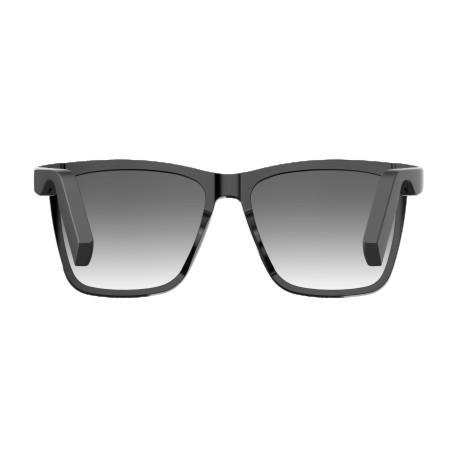
During continuous music playback, most audio sunglasses deliver 4-8 hours of operation depending on volume levels and codec requirements. Standby time extends considerably, often reaching 60-100 hours when the device enters low-power mode. Charging cycles typically complete within 90 minutes using USB-C connections, though some manufacturers now offer magnetic charging solutions for improved durability.
For brands targeting fitness enthusiasts, products like riding music sunglasses demonstrate how specialized acoustic drivers and efficient amplifiers can maintain respectable playback times despite compact form factors.
Calling and Communication Glasses
Smart glasses designed primarily for voice calls face distinct power demands. Call functionality requires consistent Bluetooth connectivity, active microphone processing, and often bone-conduction or directional speaker output. These combined requirements typically reduce maximum playback time to 3-6 hours per charge.
Products such as Bluetooth call sunglasses showcase the engineering balance between call quality, comfort, and battery consumption. Manufacturers targeting professional users often emphasize call clarity over extended music playback, leading to optimization decisions that favor voice processing efficiency.
The polarized driving call glasses category represents a specialized subset, combining polarized lenses for glare reduction with hands-free communication capabilities. These devices must balance the power demands of active noise-canceling microphones with sufficient battery reserves for full-day professional use.
Sports and Fitness Smart Glasses
Fitness-focused smart glasses prioritize extended outdoor use, often incorporating GPS tracking, heart rate monitoring, and activity metrics alongside standard audio capabilities. The additional sensor arrays create substantial power demands that impact overall battery life.
Typical runtime for sports smart glasses ranges from 4-6 hours with GPS active and sensors engaged. Products like the smart glasses music sports line demonstrate how manufacturers balance fitness tracking features against the fundamental need for adequate battery capacity.
The outdoor cycling sunglasses category illustrates extreme use cases where users require multi-hour battery life during extended training sessions. These products often feature larger temple sections accommodating higher-capacity batteries while maintaining aerodynamic profiles.
Factors Influencing Smart Glasses Battery Performance
B2B buyers evaluating OEM partnerships should understand the variables affecting battery runtime beyond basic capacity specifications. Several interconnected factors determine real-world performance expectations.
Processor Architecture and Efficiency
The microcontroller or system-on-chip (SoC) chosen by a manufacturer dramatically impacts power consumption. Qualcomm's Snapdragon AR platform, MediaTek processors, and specialized wearable chips from companies like Realtek each offer distinct power-efficiency profiles. OEM manufacturers often select components based on target price points, creating meaningful performance variations between budget and premium product tiers.
Connectivity Protocols
Bluetooth version and codec support influence power consumption during wireless transmission. Bluetooth 5.0 and newer specifications offer improved efficiency compared to older implementations. Similarly, advanced audio codecs like aptX or AAC require more processing power than standard SBC transmission, though they deliver superior sound quality.
Display and Indicator Requirements
Smart glasses incorporating heads-up displays (HUD), notification LEDs, or touch-sensitive controls draw additional power during operation. Each visual indicator represents an active component that must be powered from the limited battery reserve. Manufacturers targeting extended battery life often minimize or disable visual indicators during normal operation.
Acoustic Driver Type
Open-ear audio systems using bone-conduction or directional speakers present interesting power trade-offs. While bone-conduction drivers typically consume more power than traditional speakers, they enable situational awareness that appeals to fitness and professional users. Conventional speakers may offer better efficiency but sacrifice the safety benefits of open-ear designs.
Battery Life Comparison by Smart Glasses Type
Understanding runtime expectations requires examining specific product categories and their typical performance profiles. The following comparison illustrates current market standards for reference during OEM partner evaluation.
| Smart Glasses Type | Music Playback | Call Time | Standby | Typical Capacity |
|---|---|---|---|---|
| Audio Sunglasses | 5-8 hours | 4-6 hours | 60-100 hours | 120-250mAh |
| Calling Glasses | 4-6 hours | 3-5 hours | 50-80 hours | 150-300mAh |
| Sports/Fitness Glasses | 4-6 hours | 3-5 hours | 40-70 hours | 200-400mAh |
| AR Display Glasses | 2-4 hours | 2-3 hours | 20-40 hours | 300-500mAh |
These figures represent general industry ranges and actual performance varies based on specific hardware configurations, software optimization, and usage patterns. B2B buyers should request detailed specifications and, when possible, evaluation samples before finalizing manufacturing commitments.
Charging Solutions and User Experience Considerations
Battery life extends beyond pure capacity when evaluating smart glasses for distribution. Charging infrastructure and user experience significantly impact product satisfaction and return rates among end consumers.
Modern smart glasses typically employ one of three charging solutions: USB-C direct connection, proprietary magnetic charging cables, or portable charging cases. Each approach presents distinct advantages for both manufacturers and consumers.
USB-C charging offers universal compatibility and faster charging speeds but requires waterproofing considerations. Magnetic charging provides convenient alignment and often improved water resistance ratings but limits users to manufacturer-specific cables. Charging cases deliver the most seamless experience by eliminating cable management entirely, though they add bulk and increase overall package dimensions.
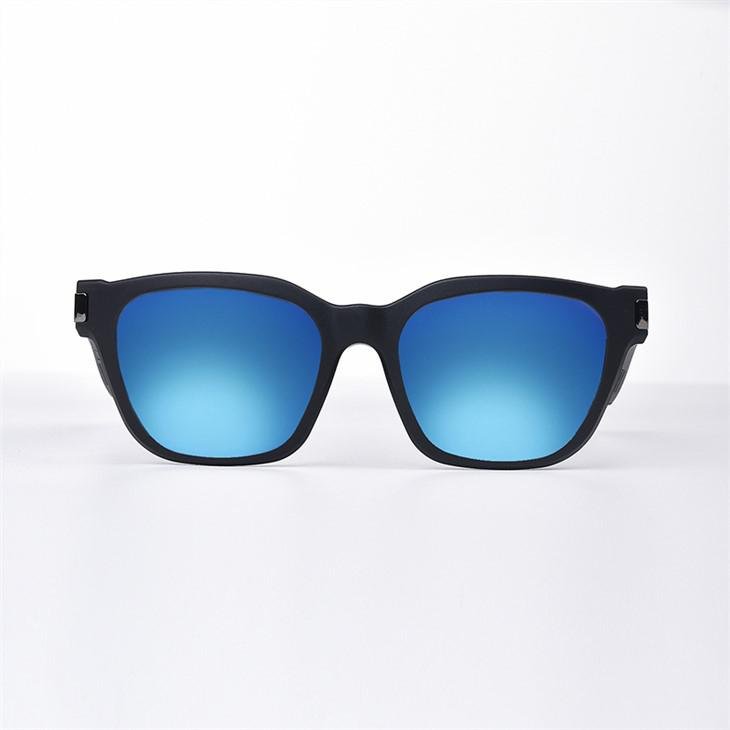
Products like Bluetooth office glasses demonstrate thoughtful charging solutions appropriate for professional environments where users expect devices to remain charged without active management.
Sourcing Considerations for B2B Buyers
When evaluating smart glasses manufacturers in China, B2B buyers should address several battery-related factors during supplier qualification and product development discussions.
Quality Assurance and Safety Standards
Reputable OEM partners provide documentation demonstrating compliance with international safety standards including UN38.3 for lithium battery transport, IEC 62133 for portable battery safety, and regional requirements such as CE, FCC, or CCC certification. Requesting sample test reports before production commitments protects brands from potential recalls or compliance issues.
Component Sourcing Transparency
Understanding your manufacturer's battery sourcing relationships reveals potential quality and supply chain risks. Leading OEM partners maintain relationships with established battery manufacturers like Panasonic, LG, or Samsung while also working with qualified Chinese suppliers such as BYD or CATL for more cost-competitive applications. Ask about qualification processes and incoming inspection protocols for battery components.
Customization Opportunities
Battery specifications often represent an adjustable parameter during OEM development. Manufacturers can modify battery capacity, charging speed, and power management algorithms to align with your target price point and use case requirements. Discussing these possibilities early in the development process enables optimization decisions that might otherwise be constrained by default component choices.
Extending Battery Life Through Software Optimization
Hardware specifications establish theoretical performance boundaries, but software implementation determines actual runtime in consumer use. Sophisticated OEM manufacturers invest substantially in power management algorithms that extract maximum efficiency from available battery capacity.
Key software optimization strategies include adaptive brightness management for any display components, intelligent connectivity cycling that disconnects inactive Bluetooth sessions, and sophisticated power state management that transitions devices through multiple sleep levels. The smart technology too glasses series demonstrates how optimized firmware can deliver impressive battery performance from compact hardware configurations.
B2B buyers should request information about software support commitments and update availability when evaluating OEM partnerships. Products with active firmware development receive ongoing battery optimization improvements that extend product lifecycle value for both distributors and end consumers.
Market Trends Affecting Smart Glasses Battery Development
The smart glasses industry continues evolving rapidly, with battery technology representing a key battleground for competitive differentiation. Several trends currently shaping development priorities deserve attention from B2B buyers planning long-term product strategies.
Solid-state battery research promises significant energy density improvements within the next several years, potentially enabling extended runtime without form factor compromises. While commercial applications remain limited, forward-thinking manufacturers monitor these developments for incorporation into future product roadmaps.
Wireless charging adoption in smart glasses continues accelerating, with the convenience factor outweighing slight efficiency losses compared to wired alternatives. Premium product tiers increasingly standardize charging case solutions that eliminate range anxiety while simplifying daily charging routines.
Integration with smartphone ecosystems creates interesting power management opportunities. Smart glasses that offload processing to connected devices can dedicate more battery capacity to core functions like audio playback, effectively extending meaningful runtime through architectural optimization rather than pure capacity increases.
Making Informed Procurement Decisions
Evaluating smart glasses battery performance requires moving beyond specification sheet comparisons to understand real-world usage implications. B2B buyers benefit from requesting production samples, conducting extended evaluation periods, and gathering feedback from representative target users before committing to volume orders.
Consider how your specific market segments use smart glasses. Professional users prioritizing all-day call functionality have different requirements than fitness enthusiasts seeking extended music playback during training sessions. Aligning battery specifications with actual use cases prevents overpaying for unnecessary capacity while ensuring adequate performance for end-user expectations.
The smart music glasses for outdoor sports category exemplifies how specialized products can optimize battery performance for specific use cases, offering lessons applicable to brand development across various smart glasses categories.
Partner with Expert Smart Glasses Manufacturers
Understanding smart glasses battery life requires balancing technical specifications against real-world usage expectations, manufacturing realities, and market demands. B2B buyers who master these interconnected factors position themselves for successful product launches and sustainable market positions.
Our experienced team at Smart Glasses Factory specializes in supporting international brands and distributors through every phase of smart glasses development. From initial concept discussions through mass production, we provide transparent guidance on battery selection, power optimization, and quality assurance that protects your brand investment.
Ready to explore smart glasses OEM manufacturing opportunities with a partner who understands your battery life requirements? Contact our engineering team today to discuss your project specifications and discover how we can help bring your smart glasses vision to market with confidence.
