
Posted At: Jun 12, 2026 - 2,029 Views

Smart glasses have moved beyond science fiction into reality, but the technology powering these devices faces unique challenges that traditional computing never had to solve. The fundamental problem is simple: human eyes demand incredibly detailed visuals, yet the hardware inside lightweight glasses cannot possibly render full-resolution imagery across an entire field of view while maintaining acceptable battery life and thermal performance. This is where foveated rendering changes everything for manufacturers and brands alike.
Foveated rendering is a computational technique that mirrors how human vision actually works. Your eyes perceive extreme detail only in a small central area called the fovea, roughly equivalent to holding your thumb at arm's length. Everything outside this focused zone exists in your peripheral vision as blurry shapes and colors. Smart glasses equipped with eye-tracking sensors can determine exactly where you are looking in real-time, allowing the processor to allocate maximum graphical resources precisely where it matters most while reducing quality in peripheral areas that your brain naturally de-emphasizes anyway.
Why Foveated Rendering Matters for Smart Glasses Manufacturing
The implications for Bluetooth office glasses and other professional smart eyewear are substantial. Traditional rendering approaches require processing power that would drain batteries within minutes or generate enough heat to make extended wearing uncomfortable. By dynamically adjusting image quality based on gaze direction, manufacturers can achieve visual experiences that feel indistinguishable from full-resolution rendering while using a fraction of the computational resources.
This efficiency translates directly into competitive advantages for brands sourcing from smart glasses factories. Products can be designed thinner, lighter, and with longer battery life without sacrificing the immersive quality that customers expect. The technology also opens doors to more affordable price points since less expensive processors become capable of delivering premium visual experiences.
Technical Foundation: Eye-Tracking and Adaptive Rendering
At the core of foveated rendering systems are sophisticated eye-tracking cameras and sensors embedded within the glasses frame. These components detect subtle movements of the pupil and cornea to calculate gaze vectors with millisecond precision. Modern infrared-based tracking systems can achieve accuracy within one to two degrees of arc, which is more than sufficient for seamless foveated rendering transitions.
Once the system knows where someone is looking, specialized software dynamically adjusts rendering parameters across different zones. The central fovea region receives full resolution, anti-aliasing, and complex lighting calculations. Moving outward through the para-foveal zone, the system progressively reduces texture resolution, polygon detail, and shader complexity. Peripheral regions might render at dramatically lower resolution and then rely on sophisticated upscaling algorithms to create the illusion of consistency.
Performance Benefits for End Users and Manufacturers
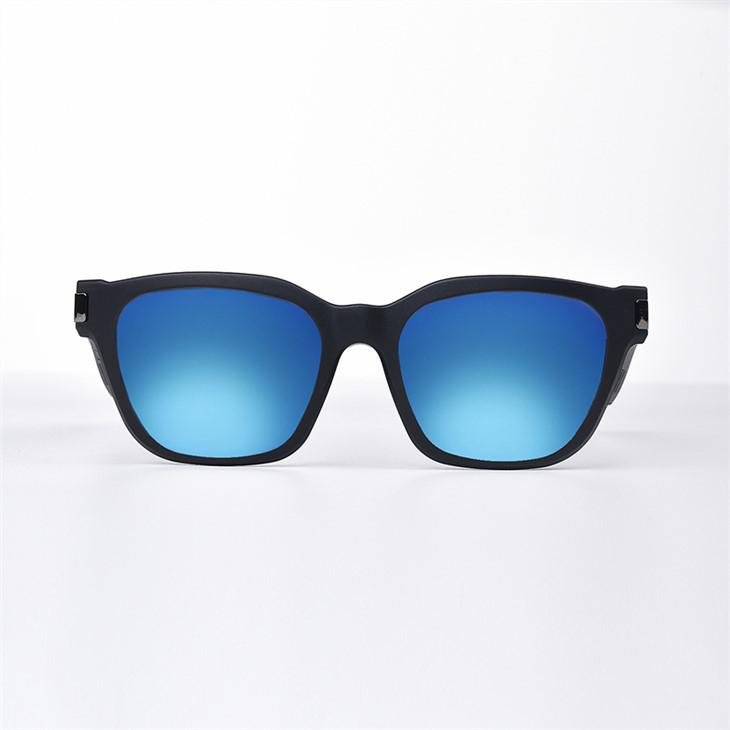
For consumers wearing music call sunglasses during their morning commute or conference calls, foveated rendering enables all-day battery life from compact batteries. The same technology allows augmented reality overlays to remain smooth and responsive even when displaying complex 3D content or multiple simultaneous applications.
Manufacturers benefit from reduced thermal output, which means smaller heat sinks, fewer cooling vents, and sleeker industrial designs. Production costs decrease because mid-range processors can now achieve what previously required expensive high-end chips. Supply chains simplify when components become more standardized across product lines that share compatible rendering architectures.
Comparison of Rendering Approaches
| Rendering Type | Resolution Uniformity | Power Consumption | Processor Requirements | Battery Impact |
|---|---|---|---|---|
| Traditional Full-Field | Uniform high resolution | Maximum | High-end only | Short battery life |
| Fixed Foveated | Center-focused reduction | Moderate | Mid-range capable | Moderate improvement |
| Dynamic Foveated | Eye-tracking adaptive | Optimized | Wide range | Significant improvement |
| Variable Foveated | Context-aware zones | Highly optimized | Flexible | Best efficiency |
Integration Challenges and Solutions in OEM Production
Implementing foveated rendering in manufacturing environments requires careful coordination between optical engineering, firmware development, and quality assurance teams. The eye-tracking calibration process must work consistently across different face shapes, pupil distances, and environmental lighting conditions. Factory floors producing wireless Bluetooth sunglasses need specialized testing equipment to verify tracking accuracy before products ship.
Latency represents another critical factor. If the rendering system cannot respond to gaze changes faster than 20 milliseconds, users experience disorientation or notice visual artifacts during rapid eye movements. Leading smart glasses manufacturers have developed proprietary prediction algorithms that anticipate eye movement direction, allowing rendering adjustments to begin before gaze actually arrives at new locations.
Market Applications Driving Manufacturing Demand
Enterprise applications are driving significant interest in foveated rendering technology. Remote collaboration tools, architectural visualization, maintenance guidance, and inventory management systems all benefit from the enhanced visual quality this approach enables. Companies developing these applications actively seek manufacturing partners capable of producing glasses with reliable foveated rendering baked into the core user experience.
The gaming sector presents enormous opportunity as well. Cloud gaming platforms increasingly support smart glasses interfaces, and titles designed around augmented reality mechanics perform dramatically better with efficient rendering. Sports brands developing sports sunglasses with integrated performance tracking can leverage foveated rendering to display real-time biometrics and route information without compromising battery life during multi-hour activities.
Future Development Trajectory for Manufacturing Partners
Eye-tracking technology continues advancing rapidly, with next-generation sensors promising higher accuracy at lower power consumption. Machine learning algorithms are becoming better at predicting user intent, enabling rendering systems to pre-load content in likely gaze destinations. These improvements will compound the efficiency gains that foveated rendering already provides.
For brands evaluating smart glasses factory partnerships, the manufacturing expertise required to implement foveated rendering effectively serves as a meaningful differentiator. Quality control processes must verify tracking calibration across production batches. Firmware teams need deep optimization experience to balance visual quality against resource constraints. Optical engineers must ensure that rendering adjustments do not introduce visible artifacts at zone boundaries.
The evolution toward neural rendering techniques suggests future glasses may use artificial intelligence to reconstruct high-quality imagery from minimal input data, pushing foveated rendering concepts even further. Manufacturing processes will need to accommodate increasingly sophisticated software stacks while maintaining the reliability and cost structure that mass-market products require.
Strategic Considerations for B2B Procurement
When evaluating smart glasses manufacturers for products that leverage foveated rendering, procurement teams should examine several factors beyond basic production capabilities. The manufacturer's experience with eye-tracking integration, demonstrated battery life achievements, and track record with similar products provide valuable signals about their technical maturity.
Software flexibility matters significantly. Brands often need to customize rendering behavior for specific applications or regional requirements. Manufacturing partners offering robust SDKs and developer support enable faster time-to-market while reducing engineering burden on the brand side. Supply chain stability for specialized components like tracking sensors and display modules should factor heavily into supplier selection decisions.
Quality assurance protocols deserve thorough review. Foveated rendering performance can degrade over time as sensors drift or firmware issues emerge. Leading factories implement accelerated lifecycle testing and remote diagnostic capabilities to catch problems before they affect end users. Service level agreements should clearly define performance thresholds and remediation procedures.
The convergence of advanced display technology, efficient processing architectures, and sophisticated rendering techniques like foveated rendering is reshaping what smart glasses can achieve. Manufacturers positioned at this intersection offer brands compelling advantages in performance, cost, and time-to-market. Exploring these capabilities with experienced smart glasses factory partners reveals opportunities to differentiate products in an increasingly competitive market.
Ready to discuss your foveated rendering requirements with our engineering team? Connect with our manufacturing specialists to explore how we can bring your smart glasses vision to life with cutting-edge display technology optimized for efficiency and performance.
