
Posted At: Sep 17, 2026 - 4 Views

The landscape of smart glasses technology is undergoing a fundamental transformation. As manufacturers and brands race to deliver increasingly sophisticated wearable experiences, Edge AI has emerged as the critical differentiator that separates market leaders from followers. For businesses seeking smart glasses OEM/ODM partnerships in China, understanding on-device processing capabilities has shifted from a technical curiosity to a strategic business imperative.
Traditional smart glasses architectures relied heavily on cloud connectivity to deliver AI-powered features. Users would speak a command, wait for transmission to remote servers, process the request, and receive results. This approach introduced latency, created dependency on stable internet connections, and raised legitimate concerns about data privacy. Edge AI fundamentally reimagines this architecture by bringing artificial intelligence processing directly to the device itself.
Understanding Edge AI Architecture in Smart Glasses
Edge AI refers to the deployment of artificial intelligence algorithms directly on hardware located at the network edge—in this case, within the smart glasses themselves. Rather than streaming voice commands, visual data, or biometric information to cloud servers for processing, Edge AI enables these computations to happen instantaneously within the wearable device. This architectural shift delivers dramatic improvements in response time, reduces bandwidth requirements, and provides users with a seamless experience regardless of connectivity conditions.
Modern neural processing units (NPUs) embedded within smart glasses chipsets have achieved remarkable computational density while maintaining energy efficiency. These specialized processors execute machine learning inference operations using a fraction of the power that traditional CPU-based approaches would require. The result is devices capable of performing complex tasks like real-time language translation, computer vision analysis, and natural language processing—all while maintaining acceptable battery life for consumer use.
Consider the implications for hands-free communication applications. A sales professional wearing smart glasses equipped with Edge AI can receive incoming messages, have them read aloud using text-to-speech, compose responses through voice dictation, and send replies—all without ever touching their phone or explicitly connecting to cloud services. The entire interaction loop executes locally on the device, providing sub-100-millisecond response times that feel instantaneous to the user.
Technical Components Powering On-Device Intelligence
The implementation of Edge AI in smart glasses requires careful integration of multiple hardware and software components. At the core lies the system-on-chip (SoC) architecture, which combines traditional processor cores with specialized neural processing units designed specifically for AI workloads. These NPUs excel at matrix operations and tensor manipulations that form the backbone of neural network inference.
Memory architecture plays an equally crucial role. Edge AI models require rapid access to both model parameters and input data. LPDDR memory solutions provide the necessary bandwidth while maintaining power efficiency suitable for wearable form factors. Storage solutions based on eMMC or UFS standards accommodate the increasing size of sophisticated AI models while enabling fast loading times.
Sensor fusion represents another critical capability. Modern smart glasses typically incorporate multiple sensing modalities—cameras, microphones, accelerometers, gyroscopes, and sometimes additional biosensors. Edge AI systems must coordinate these diverse data streams, performing temporal alignment and cross-modal inference to generate meaningful outputs. A fitness-focused device might combine heart rate data, motion patterns, and location information to provide contextual coaching without requiring cloud connectivity.
Strategic Benefits for B2B Procurement Decisions
For procurement teams evaluating smart glasses manufacturing partners, Edge AI capabilities translate directly into measurable business advantages. Products featuring robust on-device processing command premium positioning in the market, enabling brands to justify higher price points while delivering genuine user value rather than simply adding unnecessary connectivity.
Data privacy concerns have become increasingly prominent in consumer electronics. Companies that position Edge AI-enabled products can market genuine privacy benefits—user data remains on the device, processed locally, never transmitted to external servers unless explicitly requested. This differentiator resonates strongly with enterprise buyers evaluating smart glasses for field service, healthcare, or security applications where data handling regulations create compliance challenges.
Reliability engineering benefits flow naturally from Edge AI architectures as well. Products that function independently of cloud service availability deliver more consistent user experiences. Network outages, service disruptions, or API changes cannot degrade functionality for devices that operate autonomously. Manufacturing partners who have mastered Edge AI implementation provide their clients with products that perform reliably across diverse deployment environments.
Manufacturing Excellence for Edge AI Smart Glasses
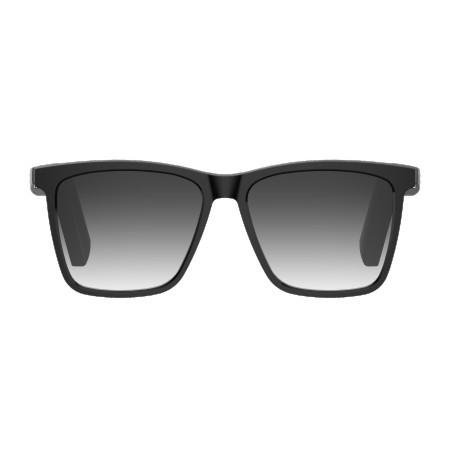
Producing Edge AI-capable smart glasses demands manufacturing expertise that extends well beyond traditional electronics assembly. Quality standards must account for the unique challenges posed by wearable AI systems, including thermal management, power optimization, and form factor constraints that leave minimal room for error.
Thermal considerations prove particularly critical. Neural processing units generate significant heat during intensive inference operations. In a device worn on the face, this heat cannot accumulate without causing user discomfort. Manufacturing processes must ensure efficient heat dissipation through careful component placement, thermal interface material application, and enclosure design that facilitates convective cooling. Our manufacturing facility implements rigorous thermal validation protocols for every Edge AI product we produce, ensuring consistent performance across all operating conditions.
Power delivery architecture requires similar attention. Edge AI workloads present dynamic power demands that fluctuate based on processing complexity. A device performing simple voice command recognition draws far less power than one executing real-time object detection. Manufacturing processes must implement robust power management systems capable of responding to these rapid changes without introducing noise or instability that could corrupt AI operations.
Model Optimization Techniques for Wearable Deployment
The path from research AI models to deployable Edge AI systems involves significant optimization. Neural networks developed in research environments typically assume abundant computational resources and operate with 32-bit floating-point precision. Deploying such models directly on wearable hardware would require excessive memory, consume unacceptable power, and produce sluggish response times.
Quantization addresses these challenges by reducing numerical precision. Converting 32-bit floating-point weights to 8-bit integer representations shrinks model size by approximately 75% while maintaining acceptable accuracy for most applications. More aggressive quantization approaches achieve even greater compression but require careful validation to ensure resulting outputs meet application requirements.
Pruning techniques remove redundant connections within neural networks, eliminating parameters that contribute minimally to final outputs. A network trained with thousands of parameters can often be compressed dramatically while preserving essential functionality. Knowledge distillation takes a different approach, training smaller student networks to replicate the behavior of larger teacher models.
Architecture optimization specifically designs neural networks for efficient execution on target hardware. Hardware-aware neural architecture search identifies network configurations that maximize performance on specific NPU implementations. These specialized architectures exploit hardware capabilities like dedicated matrix multiplication units or optimized data pathways to achieve superior efficiency compared to general-purpose designs.
| Optimization Technique | Size Reduction | Performance Improvement | Accuracy Impact |
|---|---|---|---|
| Quantization (FP32 to INT8) | 4x smaller | 2-3x faster | <1% loss |
| Pruning | 5-10x smaller | 1.5-2x faster | 1-3% loss |
| Knowledge Distillation | 3-5x smaller | 2-3x faster | Minimal loss |
| Hardware-Aware NAS | Varies | 2-5x faster | Application dependent |
Connectivity Modes and Cloud Hybrid Approaches
While Edge AI enables impressive autonomous capabilities, smart glasses rarely operate in complete isolation. Contemporary product architectures typically implement hybrid approaches that combine on-device processing with selective cloud connectivity when beneficial. Understanding these modes helps B2B buyers evaluate how specific products balance local intelligence with connected services.
Always-off operation represents the purest Edge AI implementation. Devices function entirely independently, performing all AI operations locally without any network connectivity. This mode suits applications where privacy, reliability, or regulatory compliance prevent cloud data transmission. Some specialized industrial or healthcare deployments mandate this architecture for data sovereignty or safety reasons.
Connect-on-demand modes enable cloud fallback for operations that exceed local capabilities. A device might handle routine voice commands locally while streaming complex natural language queries to cloud services for processing. This approach provides graceful scalability—devices can offer sophisticated features when connectivity exists while degrading gracefully to basic functionality when networks are unavailable.
Background sync modes continuously exchange data with cloud services while maintaining primary functionality locally. Wearables might download updated AI models, synchronize user preferences, or upload analytics data without interrupting active use. Users experience seamless operation while the device maintains cloud synchronization in the background.
For applications requiring the latest AI capabilities without permanent cloud dependency, our Smart Glasses WiFi Call Glasses demonstrate sophisticated hybrid architectures that balance local processing with on-demand connectivity.
Evaluating Manufacturing Partners for Edge AI Products
B2B buyers should assess several dimensions when evaluating smart glasses manufacturing partners for Edge AI products. Technical competency in AI model optimization and deployment represents the foundational requirement. Partners must demonstrate understanding of quantization, pruning, and architecture optimization techniques—not merely familiarity with buzzwords but demonstrated capability to produce deployable solutions.
Hardware partnerships reveal supplier relationships that influence product capabilities and supply chain reliability. Manufacturers with established relationships with leading AI silicon vendors gain earlier access to advanced chipsets, better pricing, and deeper technical support. These relationships translate into competitive advantages for clients seeking differentiated products.
Quality assurance processes for AI-enabled products require specialized testing regimes beyond traditional electronics validation. Partners must validate not only basic functionality but also AI accuracy, model behavior across edge cases, and graceful degradation under adverse conditions. Testing protocols should simulate real-world usage scenarios including variations in lighting, acoustic environments, and user behavior patterns.
Regulatory expertise varies significantly across manufacturing partners. Markets including the European Union, United States, and specific industries impose requirements on AI systems that affect product compliance. Partners with demonstrated experience navigating these regulatory landscapes provide valuable guidance during product development.
Future Trajectory of Edge AI in Smart Eyewear
The capabilities of Edge AI in smart glasses continue advancing rapidly. Chip manufacturers have announced roadmaps targeting order-of-magnitude improvements in neural processing efficiency within the next few product generations. These improvements will enable increasingly sophisticated AI capabilities in wearable form factors while maintaining acceptable battery life and thermal characteristics.
Model architecture innovations contribute similarly to progress. Researchers continue developing more efficient neural network designs that achieve equivalent accuracy with reduced computational requirements. Techniques like sparse attention mechanisms, mixture-of-experts architectures, and efficient transformer variants promise to expand the frontier of what local processing can accomplish.
Federated learning approaches may enable new product categories where devices improve through collective experience without compromising individual privacy. Multiple users' devices could collaborate to enhance AI models while keeping training data distributed rather than centralized. This paradigm aligns naturally with Edge AI architectures and could enable products that genuinely improve through use.
Making Strategic Decisions for Your Smart Glasses Line
B2B decision-makers evaluating smart glasses investments should position Edge AI capabilities as core requirements rather than optional features. The competitive landscape increasingly rewards products that deliver intelligent experiences reliably and privately. Partners who have invested in Edge AI expertise and manufacturing infrastructure provide strategic advantages that compound over time.
Product roadmaps should account for rapid capability evolution. Products shipping today will face competition from next-generation devices within twelve to eighteen months. Manufacturing partners who maintain active AI research engagement and hardware ecosystem relationships position their clients to iterate competitive products continuously.
Volume considerations influence Edge AI implementation economics significantly. Higher production volumes justify greater investment in model optimization and custom AI development. Partners capable of scaling from initial deployment through high-volume production provide valuable continuity and learning curve advantages.
Ready to explore how Edge AI capabilities can differentiate your smart glasses product line? Our engineering team works directly with B2B partners to translate AI requirements into manufacturable products. From initial concept through mass production, we provide the technical expertise and manufacturing infrastructure that transforms ambitious specifications into market-ready reality. Contact our team to discuss your Edge AI smart glasses requirements and discover how our manufacturing capabilities can accelerate your market entry.
