
Posted At: May 22, 2026 - 1,158 Views

The global smart glasses market continues its upward trajectory, driven by advances in wireless technology, miniaturized components, and growing consumer appetite for hands-free audio, fitness tracking, and augmented reality experiences. For B2B buyers, distributors, and brands, the real opportunity lies in custom wireless smart glasses that carry unique designs, proprietary features, and brand-aligned aesthetics. A one-size-fits-all approach no longer satisfies an increasingly segmented market. Instead, companies that leverage design flexibility are capturing market share, building brand loyalty, and differentiating themselves from competitors still relying on generic OEM products.
Working with an experienced smart glasses manufacturer in China unlocks unprecedented control over every aspect of product development. From frame geometry and material selection to acoustic chamber tuning and firmware customization, the possibilities are vast. This article examines why design flexibility matters, what customization dimensions are available, and how B2B partners can navigate the journey from concept to mass production.
Why Design Flexibility Drives B2B Growth
B2B buyers operate in competitive environments where product differentiation determines margin stability and customer retention. Generic smart glasses, however technically capable, fail to create lasting brand impressions. When a retailer or brand deploys glasses that look and function identically to dozens of competitors, price becomes the sole differentiator—leading to margin erosion and commoditization traps.
Custom wireless smart glasses break this cycle. By tailoring designs to specific target demographics, use cases, and brand identities, companies create products that feel intentional rather than opportunistic. A fitness-focused brand can commission glasses with aggressive sporty frames, sweat-resistant coatings, and GPS-integrated tracking. A luxury eyewear company can pursue minimalist titanium frames with bone-conduction audio and premium finishing. The same underlying wireless technology platform supports wildly different market positions.
This flexibility also enables geographic market adaptation. European consumers may prefer understated designs with polarized lenses and compliance certifications. Asian markets might prioritize lightweight composites and vibrant color options. North American buyers often seek durability ratings and cross-device Bluetooth compatibility. A manufacturer capable of supporting these variations positions B2B partners to expand geographically without sacrificing product coherence.
Frame Materials and Structural Customization
The foundation of any smart glasses product is its frame. Material selection influences weight, durability, comfort, manufacturing cost, and visual appeal. Chinese manufacturers have expanded their material portfolios significantly, offering B2B partners choices that were previously reserved for premium domestic brands.
TR-90 Nylon remains the dominant choice for mass-market wireless audio glasses. It offers excellent impact resistance, flexibility, and lightweight characteristics at a reasonable cost. Manufacturers can injection-mold TR-90 into complex geometries, enabling distinctive temple shapes and wraparound silhouettes.
Polycarbonate delivers optical clarity and UV protection integration, making it suitable for sunglass applications. It machines cleanly and accepts colorants uniformly, supporting bold or subtle color schemes depending on brand requirements.
Magnesium alloys appeal to premium segments. These materials reduce frame weight while maintaining structural rigidity, though they require more sophisticated manufacturing processes and carry higher per-unit costs.
Titanium and beta-titanium represent the ultra-premium tier. Corrosion-resistant, hypoallergenic, and exceptionally durable, titanium frames command higher price points and appeal to luxury and professional markets. Manufacturers capable of precision titanium fabrication are relatively rare, making them valuable partners for brands pursuing the upper end of the market.
Wood composites and bamboo laminates serve eco-conscious brands seeking natural aesthetics. These materials require specialized handling during component integration but create compelling product stories for sustainability-oriented marketing campaigns.
Acoustic Design and Audio Performance
Wireless smart glasses depend on audio quality for their core functionality. Whether delivering music, phone calls, or navigation prompts, the acoustic experience directly influences customer satisfaction and return rates. Design flexibility in audio engineering encompasses several dimensions.
Driver selection affects frequency response, maximum volume, and distortion levels. Smaller drivers conserve space within temples but may sacrifice bass response. Larger drivers deliver richer sound but increase temple thickness and weight. Manufacturers work with B2B partners to balance these tradeoffs based on target use cases.
Open-ear audio architecture has become the preferred approach for wireless glasses. This design positions speakers adjacent to the ear canal without creating an airtight seal, preserving environmental awareness while delivering intelligible audio. The angle, distance, and reflector geometry of open-ear drivers require careful engineering to minimize sound leakage in public spaces—a concern for privacy-conscious users.
Microphone arrays determine call quality and voice assistant responsiveness. Beamforming microphone configurations use multiple pickups to isolate speech from background noise. Wind noise rejection becomes critical for outdoor applications, requiring specialized port geometry and DSP tuning.
Bone conduction options represent an alternative audio pathway, vibrating the skull directly to transmit sound through the inner ear. This approach eliminates speaker placement concerns entirely but requires precise contact point engineering to achieve acceptable volume levels without discomfort.
Wireless Connectivity and Smart Features
The "wireless" in wireless smart glasses encompasses multiple connectivity standards and protocols. Design flexibility extends into the technology stack, enabling B2B partners to specify feature sets aligned with their customer expectations and price positioning.
Bluetooth 5.3 serves as the baseline for most wireless glasses implementations. It provides sufficient bandwidth for audio streaming, low power consumption for all-day battery life, and stable multipoint connections allowing simultaneous pairing with smartphones and computers. Manufacturers can integrate certified Bluetooth modules that accelerate regulatory approval processes in target markets.
Qualcomm aptX and AAC codecs optimize audio streaming quality over Bluetooth. aptX Adaptive offers near-lossless compression for Android devices, while AAC provides similar benefits for Apple ecosystems. B2B partners targeting audiophiles should ensure their chosen manufacturer supports these codec options.
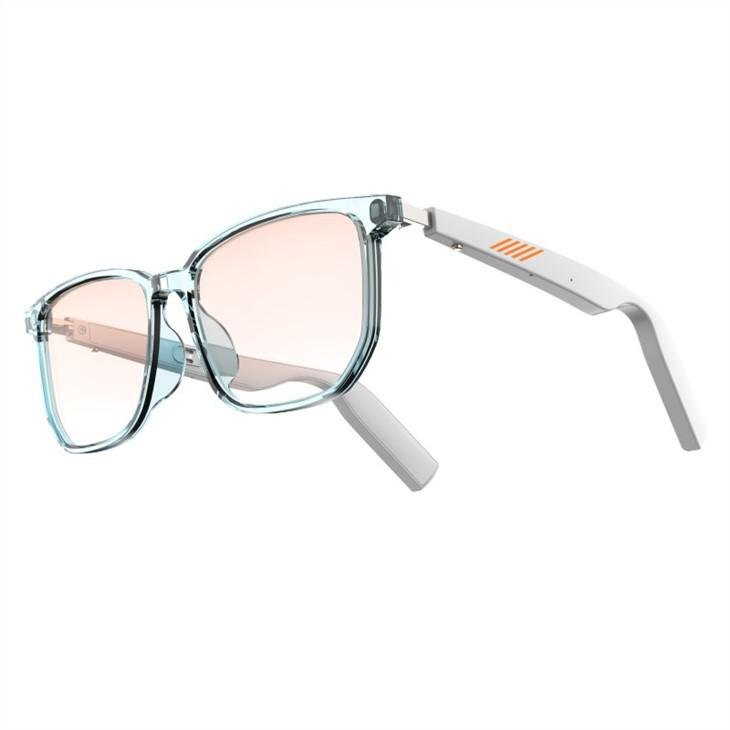
Touch and gesture controls vary in implementation from simple button switches to capacitive touch strips to advanced optical sensors. The chosen control method influences industrial design, as touch surfaces require consistent material properties and seamless surface treatments.
Voice assistant integration connects glasses to smartphone AI systems like Siri, Google Assistant, or Alexa. This feature requires microphone quality optimization and cloud API coordination that manufacturers must support during development.
Fitness sensors including accelerometers, gyroscopes, heart rate monitors, and GPS chipsets enable activity tracking functionality. These components demand careful PCB layout to prevent electromagnetic interference between sensors and wireless transceivers.
Lens Technology and Optical Customization
Smart glasses must function as eyewear first, technology second. Optical performance and eye protection capabilities significantly influence purchase decisions. Design flexibility in lens technology allows B2B partners to serve prescription, sunglass, and sport markets with appropriate solutions.
Polarized lenses reduce glare from reflective surfaces, improving visual comfort during driving, fishing, water sports, and outdoor activities. Manufacturing partners can integrate polarization films during lens molding or apply them as surface coatings.
Photochromic lenses automatically darken in response to UV exposure, eliminating the need for separate prescription and sunglass frames. However, photochromic chemistry reacts differently to automotive glass-filtered light, requiring careful customer education.
Blue light filtering addresses concerns about digital device eyestrain. Coatings or integrated filter layers reduce high-energy visible light transmission, appealing to office workers and gamers.
Prescription (Rx) compatibility ensures vision correction without separate corrective eyewear. Manufacturers offer insertable prescription lens carriers, direct Rx surfacing on smart glass lenses, or magnetic clip-on systems for on-demand correction.
Interchangeable lens systems provide maximum versatility, allowing users to swap between clear, tinted, polarized, and other lens types based on lighting conditions. This approach requires precise mechanical design to maintain optical alignment during lens exchange.
OEM vs. ODM: Choosing the Right Partnership Model
B2B buyers entering the smart glasses market must determine whether to pursue OEM (Original Equipment Manufacturing) or ODM (Original Design Manufacturing) partnerships. Each model offers distinct advantages depending on internal capabilities, development timelines, and competitive strategy.
OEM partnerships involve manufacturing products based on buyer-provided designs. The B2B partner owns the intellectual property and controls specifications entirely. This approach suits companies with established industrial design teams, existing product specifications, or proprietary technology to protect. OEM relationships require greater engineering coordination but deliver maximum customization control.
ODM partnerships leverage the manufacturer's existing product platforms and reference designs. B2B partners select from modular feature configurations, apply brand treatments, and bring products to market with reduced development timelines. ODM approaches minimize upfront investment and engineering burden, though customization depth may be constrained by platform limitations.
Most sophisticated smart glasses manufacturers offer hybrid approaches, beginning with ODM baseline platforms and progressively introducing custom elements as production volumes justify development investment. This graduated flexibility allows B2B partners to validate market demand before committing to full custom development.
Minimum Order Quantities and Production Scaling
Design flexibility intersects with production economics through minimum order quantity (MOQ) requirements. Custom frame tooling, specialized components, and quality validation processes impose setup costs that manufacturers must amortize across production runs. Understanding MOQ structures helps B2B partners plan market entry strategies and inventory risk management.
Typical custom smart glasses projects involve:
- Tooling investments for custom frame injection molds ranging from $15,000 to $50,000 depending on complexity and cavity count
- MOQs of 500-2,000 units for custom configurations on established platforms
- MOQs of 3,000-5,000 units for fully custom products requiring new tooling across all components
- Longer lead times of 90-180 days for custom development versus 30-45 days for platform-based products
Manufacturers increasingly offer low-MOQ pilot programs that enable market testing with smaller quantities at premium unit costs. These programs reduce risk for new market entrants while preserving customization options. B2B partners should negotiate pilot program terms that include transition pricing when scaling to full production volumes.
Quality Assurance and Compliance Certification
Design flexibility must be accompanied by rigorous quality systems that ensure consistent production output. Smart glasses entering markets in the United States, European Union, and other regulated jurisdictions require specific certifications that manufacturers must support.
IPX water resistance ratings define protection levels against moisture ingress. Most audio glasses target IPX4 (splash resistant) or IPX5 (water jet resistant) ratings. Achieving higher ratings requires gasket engineering, port redesign, and adhesive selection that influence industrial design.
CE, FCC, and RoHS certifications demonstrate compliance with safety, electromagnetic compatibility, and hazardous substance restrictions. Manufacturers with pre-certified wireless modules accelerate market entry, as full module certification is more straightforward than discrete component certification.
Optical safety standards including ANSI Z87.1 (U.S.) and EN ISO 12312-1 (Europe) apply to lenses and frame impact resistance. Manufacturers must test against these standards during development and maintain batch testing documentation.
REACH and California Prop 65 compliance addresses chemical restrictions in consumer products, particularly relevant for skin-contact frame materials and coatings.
Time-to-Market Considerations
Speed matters in consumer electronics markets where product cycles compress and competitive pressure intensifies. Design flexibility should not come at the cost of unacceptable market timing. Experienced manufacturers help B2B partners navigate tradeoffs between customization depth and development velocity.
Platform-based customization reduces development timelines by 40-60% compared to ground-up development. B2B partners leverage proven technology stacks while differentiating through industrial design and branding.
Parallel development processes overlap tooling fabrication, PCB development, and certification testing where dependencies permit. Skilled program managers coordinate these activities to compress critical path timelines.
Design for Manufacturing (DFM) reviews during development identify production challenges early, preventing costly redesigns after tooling completion. Manufacturers with strong DFM cultures catch potential issues during CAD development rather than during pilot production runs.
Partner Selection Criteria for B2B Buyers
Identifying the right manufacturing partner requires evaluating multiple dimensions beyond unit pricing. B2B buyers should assess capabilities across design support, engineering depth, quality systems, and commercial terms.
| Criteria | What to Evaluate | Red Flags |
|---|---|---|
| Engineering Capability | In-house industrial design, acoustic engineering, firmware development | Outsources all engineering; no in-house expertise |
| Quality Systems | ISO 9001 certification, incoming inspection, batch testing protocols | No documented quality procedures; no testing equipment |
| Communication | English-speaking account managers, response time, project transparency | Slow responses; unclear escalation paths |
| Production Capacity | Monthly unit capacity, equipment inventory, workforce size | Unable to meet volume requirements; single-shift operations |
| Certifications | CE/FCC experience, optical lab partnerships, regulatory expertise | No prior certification experience; unfamiliar with target markets |
| Financial Stability | Business history, client references, payment terms flexibility | Unable to provide references; aggressive payment demands |
Getting Started with Your Custom Smart Glasses Project
The journey from initial concept to shipped product involves several phases that B2B partners should anticipate. Establishing clear expectations, deliverables, and timelines at each phase prevents misunderstandings and keeps projects on track.
Discovery Phase: Define product requirements including target market, price positioning, feature priorities, and aesthetic direction. Share competitive product samples or reference designs that illustrate desired outcomes. Manufacturers review requirements and provide feasibility assessments, preliminary specifications, and budget quotations.
Design Phase: Collaborate on industrial design through iterative CAD development. Evaluate material options, color treatments, and finish samples. Conduct acoustic prototyping to validate audio performance targets. Freeze design specifications before committing to tooling fabrication.
Tooling and Prototype Phase: Manufacture injection molds, produce pilot samples, and conduct internal testing. Share samples with B2B partners for evaluation and feedback. Refine designs based on pilot findings before proceeding to production tooling approval.
Certification Phase: Submit samples to accredited testing laboratories for required certifications. Coordinate with manufacturers on documentation, test reports, and compliance markings. Typical certification timelines range from 4-8 weeks depending on complexity and laboratory capacity.
Production Phase: Upon certification completion and pilot approval, transition to mass production. Establish quality inspection protocols, packaging specifications, and shipping logistics. Maintain ongoing communication regarding production progress, inventory positioning, and demand forecasting.
Building Long-Term Manufacturing Partnerships
Custom wireless smart glasses development establishes relationships that extend beyond single product cycles. B2B buyers who invest in partnership development gain access to continuous innovation, preferential capacity allocation, and increasingly favorable commercial terms over time.
Manufacturers with strong partnership orientations share technology roadmaps, suggest feature enhancements based on market intelligence, and proactively address supply chain challenges before they impact production. These relationships require mutual investment in communication infrastructure, quarterly business reviews, and joint planning processes.
Intellectual property protection deserves explicit attention in partnership agreements. B2B partners should verify that manufacturers maintain strict confidentiality policies, avoid serving direct competitors in the same market segments, and implement physical and digital security measures for design assets.
Volume commitment incentives reward long-term partnership development. Manufacturers frequently offer progressive pricing tiers that lower per-unit costs as cumulative order volumes increase. B2B partners should negotiate framework agreements that establish volume commitments and pricing formulas across multiple product generations.
Ready to explore custom wireless smart glasses development with a manufacturing partner that understands B2B requirements? Review our Smart Touch Music Glasses to see an example of customizable platform technology, or Music Call Sunglasses for integrated communication features. Our engineering team welcomes detailed discussions about your specific customization requirements and market objectives.
Whether you represent a startup brand entering the smart wearables market, an established distributor expanding your product portfolio, or an enterprise seeking employee wearable solutions, design flexibility through custom wireless smart glasses manufacturing creates competitive advantages that generic products cannot match. The manufacturers who master this flexibility while maintaining quality and reliability will capture the growth opportunities emerging from the continued expansion of the smart eyewear category.
