
Posted At: May 06, 2026 - 2,307 Views

The smart glasses market continues expanding as businesses seek differentiated wearable technology products. B2B buyers, distributors, and brands increasingly recognize the value of custom AI smart glasses to capture specific market segments and build unique brand identities. Designing your own smart eyewear product involves navigating hardware selection, AI integration, industrial design, and manufacturing processes that demand strategic decision-making.
Understanding Your Market Positioning
Before diving into technical specifications, successful smart glasses development starts with crystal-clear market positioning. Are you targeting enterprise productivity applications, consumer lifestyle accessories, or specialized industry verticals like healthcare and logistics? Each market segment demands distinct feature priorities, price points, and design aesthetics.
Consumer-focused AI smart glasses typically emphasize sleek design language, seamless smartphone integration, and entertainment features like music playback and voice assistance. Enterprise deployments prioritize durability, extended battery life, and specialized software integrations for workforce management. Understanding these distinctions shapes every subsequent design decision.
Consider conducting competitive analysis of existing products in your target market. Examine successful entries and identify gaps your custom product could fill. Perhaps competitors offer excellent audio quality but lack advanced AI processing capabilities, or maybe no one serves your specific regional market with locally-optimized features.
Core Hardware Specifications to Define
AI smart glasses require careful balancing of components within size and weight constraints. Frame dimensions directly impact battery capacity and processor options, making early specification decisions critical for product success.
Display Technology Selection
Display systems represent one of the most consequential choices in smart glasses design. Waveguide-based optical displays offer transparency advantages suitable for augmented reality applications, while microdisplay solutions provide superior brightness for outdoor use cases. Your target application should drive this fundamental decision.
For basic notification and navigation features, simpler display approaches like peripheral LED indicators or embedded micro-projectors may suffice while keeping costs manageable. Advanced AR experiences requiring spatial computing demand sophisticated optical engines with wider field-of-view specifications.
Processor and Memory Architecture
AI functionality requires dedicated processing capability. On-device AI processing reduces latency and maintains privacy advantages over cloud-dependent alternatives. Modern System-on-Chip solutions integrate CPU, GPU, and neural processing units within single packages optimized for wearable power envelopes.
Memory specifications affect both performance and cost. Consider minimum RAM requirements for your target AI workloads, storage needs for offline functionality, and thermal considerations when selecting components that will operate in close proximity to the user's face.
Battery and Power Management
Battery life expectations vary significantly across market segments. Enterprise users typically require full workday battery performance, while consumer lifestyle products might prioritize lighter weight over extended runtime. Custom smart glasses design allows balancing these competing priorities based on your specific customer requirements.
Power management becomes especially critical for AI features that demand continuous processing. Intelligent power states, motion-triggered activation, and efficient neural network architectures all contribute to acceptable battery performance within consumer-friendly form factors.
AI Capabilities and Software Integration
What distinguishes AI smart glasses from conventional wearables is intelligent processing that understands context and user intent. Defining your AI feature set early shapes hardware requirements and manufacturing partnerships.
Voice Assistant Integration
Natural language voice interfaces represent the most common AI capability in smart glasses. Multi-language support, wake-word customization, and integration with existing voice platforms like Google Assistant or proprietary enterprise systems all require careful planning during design phases.
Consider microphone array design for effective voice capture in varied acoustic environments. Beamforming technology improves recognition accuracy in noisy conditions typical of outdoor and workplace settings. Our Smart Glasses WiFi Call Glasses demonstrate advanced audio processing suitable for business communication applications.
Computer Vision and Recognition
Advanced AI applications include object recognition, scene understanding, and real-time translation capabilities. These features demand higher processing throughput and typically require dedicated neural processing hardware. Cameras integrated into smart frames must meet resolution and frame rate specifications supporting your target recognition accuracy.
Privacy considerations become paramount with vision-capable devices. Design decisions around local versus cloud processing, data retention policies, and visible recording indicators affect both regulatory compliance and user adoption in different markets.
Health and Wellness Monitoring
Biometric sensors including heart rate monitoring, blood oxygen measurement, and stress detection increasingly appear in smart glasses products. These features require additional hardware integration and validation testing to ensure accuracy across diverse user populations.
Industrial Design and Ergonomics
User adoption depends heavily on comfort and aesthetics. Smart glasses must function as everyday wearables people actually want to wear, not bulky technology experiments that spend most time in drawers.
Weight Distribution and Frame Geometry
Balancing component weight prevents pressure points and fatigue during extended wear. Modern materials including titanium alloys, carbon fiber composites, and advanced polymers enable lightweight construction without sacrificing durability. Frame geometry must accommodate diverse head shapes and sizes through adjustable components or modular sizing systems.
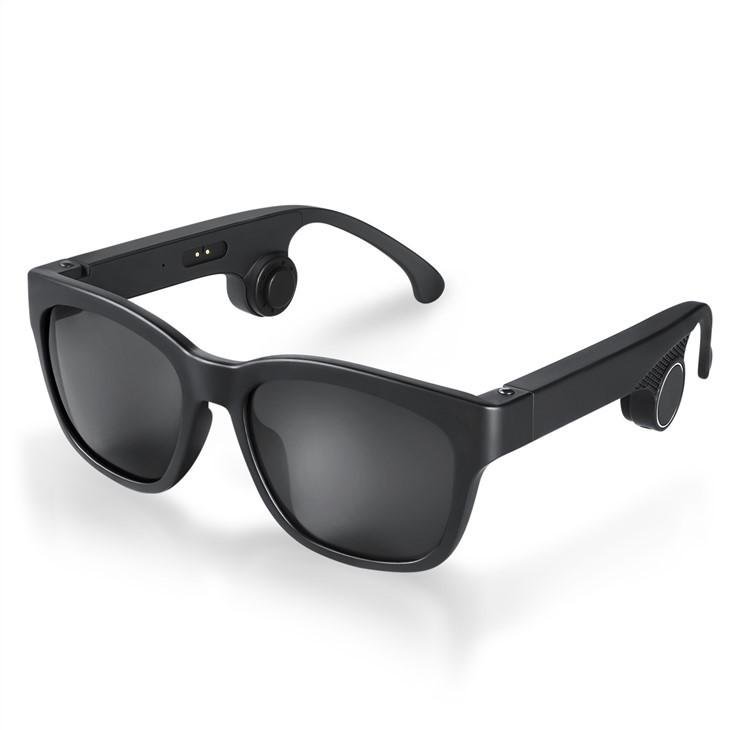
Our Android Fashion Bluetooth Smart Glasses exemplify how style-conscious design can complement technology integration, achieving visual aesthetics that appeal to mainstream consumers.
Lens Options and Optical Integration
Prescription lens compatibility dramatically expands addressable market size. Design for removable or integrated prescription inserts, or partner with lens providers offering coating services. UV protection, blue light filtering, and polarization options address specific use cases and environment types.
Explore lens options like our Anti-Blue Light Lens Transparent coating solutions for users concerned about digital eye strain, or Rich Age Polarized Lens for outdoor applications requiring glare reduction.
Working with OEM/ODM Manufacturing Partners
Successful custom smart glasses development requires manufacturing partnerships that combine technical expertise with production scalability. China-based manufacturers offer mature supply chains, competitive pricing, and extensive experience with consumer electronics production.
Evaluating Manufacturing Capabilities
Request detailed capability assessments from prospective partners. Critical evaluation areas include assembly line capacity for your projected volumes, quality control systems and certifications, prototyping facilities for design validation, and supply chain relationships for key components.
Manufacturing partners with established smart glasses experience understand unique challenges including optical alignment, waterproofing for wearable exposure, and electromagnetic compatibility considerations. These expertise areas significantly reduce development risk compared to general-purpose electronics manufacturers.
IP Protection and Confidentiality
Custom product development requires robust intellectual property safeguards. Establish clear confidentiality agreements, verify partner track records with similar projects, and consider patent protection strategies for novel technical approaches or industrial designs before engaging manufacturers.
Reputable ODM partners maintain dedicated programs protecting client designs from unauthorized use or disclosure. Request references from existing clients and verify third-party audit results demonstrating compliance with international standards.
Production Volume Planning
Initial production runs require careful forecasting to balance inventory risk against per-unit costs. Lower volumes typically involve higher unit pricing but reduced capital commitment and storage requirements. Many manufacturers offer volume discount structures that become economically attractive at thresholds like 1,000, 5,000, or 10,000 units.
Consider production phase timelines including tooling preparation, component procurement, assembly, testing, and shipping when establishing product launch calendars. Experienced partners provide realistic timelines based on specification complexity and their current production schedules.
Quality Assurance and Compliance Testing
Smart glasses entering different markets require compliance with regional regulations covering electronics safety, radio frequency emissions, and optical device standards. Build testing requirements and certification costs into project budgets from the start.
Durability and Reliability Testing
Wearables face harsh usage conditions including temperature extremes, humidity exposure, perspiration contact, and physical impact. Accelerated life testing protocols validate product reliability before market release. IP rating for water and dust resistance addresses consumer expectations for daily-use devices.
Frame stress testing ensures hinge durability and structural integrity through thousands of open-close cycles. Drop testing from typical wearing heights identifies vulnerable components requiring design refinement.
Regulatory Compliance Requirements
Market-specific certifications include CE marking for European sales, FCC compliance for United States markets, and CCC certification for China distribution. Optical devices face additional regulations covering light emission safety and potential photosensitivity concerns.
Radio frequency compliance becomes particularly complex for connected smart glasses featuring Bluetooth, WiFi, and cellular connectivity options. Testing across all supported frequency bands and power levels ensures regulatory approval in target markets.
Cost Structure and Pricing Strategy
Understanding the cost drivers in smart glasses manufacturing enables effective pricing strategy development. Major cost components include components and materials, assembly labor, tooling amortization, and quality control overhead.
| Cost Category | Typical Range | Optimization Strategies |
|---|---|---|
| Electronic Components | 35-50% of total cost | Component standardization, volume procurement |
| Optical Components | 15-25% of total cost | Simplified display requirements, lens material selection |
| Frame Materials | 10-15% of total cost | Material substitution, tooling efficiency |
| Assembly and Testing | 10-20% of total cost | Production location, automation investment |
| Tooling and NRE | 5-10% amortized | Design simplification, platform reuse |
Target retail pricing must account for distributor margins, retail overhead, and marketing costs while remaining competitive in your chosen market segment. Custom products often command premium pricing when features justify perceived value to end customers.
Bringing Your Product to Market
Custom AI smart glasses development represents a significant but achievable undertaking with proper planning and manufacturing partnerships. The combination of growing market demand, maturing component ecosystems, and experienced production facilities creates favorable conditions for brand differentiation through custom products.
Starting with clear market positioning, defining realistic specifications, and engaging qualified manufacturing partners early in the process maximizes probability of successful product commercialization. Iterative prototyping with user feedback refines designs before committing to mass production commitments.
Ready to explore custom AI smart glasses development with an experienced manufacturing partner? Our team at Smart Glasses Factory specializes in OEM and ODM production for global brands and distributors. Share your product concept and requirements to receive detailed manufacturing proposals tailored to your market objectives.
Browse our Black Technology Smart Sunglasses for inspiration on design possibilities, or review our complete Wireless Bluetooth Sunglasses collection to understand current market offerings. We welcome inquiries from serious B2B buyers seeking long-term manufacturing partnerships for smart eyewear products.
