
Posted At: Jun 05, 2026 - 1,292 Views

In the rapidly evolving smart glasses industry, understanding artificial intelligence terminology has become essential for businesses seeking to source, manufacture, or distribute next-generation eyewear. Whether you are evaluating smart Bluetooth audio glasses or exploring advanced augmented reality solutions, a solid grasp of AI concepts empowers you to make informed decisions when negotiating with manufacturers.
This comprehensive glossary breaks down the critical AI terms that define modern smart glasses technology, helping procurement specialists, product managers, and business development teams navigate technical conversations with confidence.
Machine Learning (ML) in Smart Glasses
Machine learning represents the foundational technology enabling smart glasses to improve performance over time without explicit programming. In smart eyewear applications, ML algorithms analyze user behavior patterns, optimize battery consumption, and enhance audio quality based on accumulated data.
Manufacturers implement various ML approaches depending on product requirements. Supervised learning helps smart glasses recognize predefined objects and faces, while unsupervised learning enables devices to identify patterns in user interactions. For B2B buyers, understanding the ML capabilities of potential manufacturing partners directly impacts product differentiation and market positioning.
Computer Vision
Computer vision encompasses the technologies allowing smart glasses to interpret and understand visual information from the surrounding environment. This capability powers features like scene recognition, object detection, and visual search functionality that transform ordinary eyewear into intelligent assistants.
Modern smart glasses typically incorporate multiple cameras and sophisticated computer vision algorithms to deliver real-time visual analysis. The integration of computer vision requires careful hardware selection, with manufacturers balancing resolution, frame rates, and power consumption to meet specific use case requirements.
When sourcing from Chinese OEMs, evaluate their computer vision expertise by reviewing product demonstrations and requesting performance benchmarks for key visual recognition tasks.
Natural Language Processing (NLP)
Natural language processing enables voice command recognition, real-time translation, and conversational AI interactions in smart glasses. As hands-free communication becomes increasingly important across professional and consumer markets, NLP capabilities directly influence product utility.
Advanced NLP implementations support multilingual interactions, context awareness, and natural conversation flow. Some manufacturers integrate cloud-based NLP services, while others prioritize on-device processing for improved privacy and reduced latency.
Edge AI and On-Device Processing
Edge AI refers to processing AI workloads directly on the smart glasses hardware rather than relying on cloud servers. This architectural approach offers significant advantages including reduced latency, enhanced privacy, and consistent performance regardless of network connectivity.
For B2B buyers, edge AI capabilities determine whether products can function effectively in enterprise environments with restricted internet access or in regions with unreliable connectivity. The latest directional audio smart glasses demonstrate how on-device processing enables responsive voice interactions without cloud dependency.
Neural Networks and Deep Learning
Neural networks form the computational architecture underlying modern AI systems, modeled loosely on biological brain structures. Deep learning extends this concept with multiple network layers capable of learning increasingly abstract feature representations.
Smart glasses manufacturers leverage neural networks for diverse applications including speech recognition, image classification, gesture detection, and predictive text input. The complexity of neural network architectures directly impacts processing requirements and battery life, making optimization a critical engineering consideration.
Sensor Fusion
Sensor fusion combines data from multiple hardware sensors—including accelerometers, gyroscopes, magnetometers, and cameras—to create a comprehensive understanding of device context and user activity. This technique enables accurate motion tracking, context-aware features, and enhanced environmental awareness.
Premium smart glasses implementations achieve seamless sensor fusion through carefully calibrated algorithms that weight different data sources based on reliability and relevance. For OEM partnerships, understanding a manufacturer's sensor fusion expertise indicates their ability to deliver polished user experiences.
Gesture Recognition Technology
Gesture recognition allows users to control smart glasses through physical movements, touches, or eye tracking. This interaction modality provides intuitive hands-free operation for scenarios where voice commands prove impractical or socially inappropriate.
Modern implementations range from simple touch-sensitive temples to sophisticated hand tracking using integrated cameras. The technology requires careful calibration to distinguish intentional commands from incidental movements while maintaining low power consumption.
Object Detection and Recognition
Object detection and recognition capabilities enable smart glasses to identify products, text, landmarks, and other elements within the user's visual field. This technology powers applications including visual search, accessibility features, and enterprise workflow optimization.
Recognition accuracy depends on training data quality, neural network architecture, and processing resources available on-device. Leading manufacturers continuously improve recognition models through over-the-air updates, ensuring products maintain relevance as new objects and use cases emerge.
Voice Recognition and Wake Words
Voice recognition technology converts spoken language into executable commands, while wake word detection enables always-listening functionality without continuous battery drain. These capabilities form the primary interface for many smart glasses products.
Recognition accuracy in challenging acoustic environments—such as outdoor settings, crowded spaces, or during physical activity—varies significantly across implementations. B2B buyers should evaluate manufacturer performance claims against real-world usage scenarios relevant to target markets.
Context Awareness and Predictive Analytics
Context awareness enables smart glasses to understand user situations through combined analysis of location, time, activity patterns, and environmental factors. This intelligence powers proactive features that anticipate user needs without explicit prompting.
Predictive analytics extends context awareness by forecasting likely user actions based on historical patterns and current context. Applications include anticipating navigation needs, surfacing relevant information, and optimizing system resources for anticipated usage.
AI Chip Architectures for Smart Glasses
Specialized AI chips designed for mobile and wearable applications deliver the computational power required for on-device machine learning while maintaining energy efficiency. Understanding processor capabilities helps B2B buyers evaluate performance potential and future-proofing strategies.
| Chip Category | Typical Application | Power Consumption | AI Performance |
|---|---|---|---|
| Entry-Level | Basic voice commands, simple sensors | 50-100mW | 0.5-1 TOPS |
| Mid-Range | Computer vision, NLP processing | 100-500mW | 1-5 TOPS |
| High-Performance | Real-time AR, advanced recognition | 500mW-2W | 5-15 TOPS |
Battery Optimization Through AI
AI-driven power management extends operational time by intelligently allocating resources based on usage patterns and predicted needs. Machine learning models analyze historical battery consumption to optimize charging cycles, background processes, and processing workloads.
For products like fashion music glasses, battery optimization directly impacts user satisfaction and market reception. Evaluate manufacturer approaches to power management as part of overall product quality assessment.
Privacy and Data Security Considerations
AI-enabled smart glasses raise significant privacy considerations due to their camera and microphone capabilities. On-device processing reduces privacy risks by limiting data transmission to external servers, while federated learning approaches enable model improvements without centralizing personal information.
Regulatory compliance varies across markets, making it essential to understand how manufacturing partners address data protection requirements. Look for manufacturers implementing hardware-level privacy controls, encryption standards, and transparent data handling policies.
AR Integration and Spatial Computing
Augmented reality capabilities represent the convergence point for multiple AI technologies in smart glasses. Spatial computing requires real-time environmental understanding, precise tracking, and seamless digital overlay placement—all powered by sophisticated artificial intelligence systems.
The progression from basic notification display to immersive AR experiences depends on advances in simultaneous localization and mapping (SLAM), depth sensing, and neural rendering techniques. Manufacturing partners with strong AR capabilities typically demonstrate expertise across these interconnected domains.
Future AI Trends in Smart Eyewear
Emerging AI developments promise continued capability expansion in smart glasses products. On-device large language models will enable sophisticated conversational AI without cloud connectivity, while advances in neural processing units deliver desktop-level AI performance in wearable form factors.
Emotional intelligence through facial expression and tone analysis represents another frontier, enabling more natural human-computer interaction. B2B buyers should evaluate manufacturer roadmaps for AI capability integration, ensuring products remain competitive as the technology landscape evolves.
Selecting AI-Capable Manufacturing Partners
When evaluating Chinese OEM/ODM manufacturers for smart glasses production, assess their AI expertise across several dimensions. Technical team composition, existing product portfolios demonstrating AI integration, and partnerships with semiconductor vendors indicate manufacturing capability maturity.
Request detailed specifications for AI processing capabilities, including supported model types, inference latencies, and power consumption profiles. Manufacturers confident in their AI implementation readily provide this technical documentation to serious B2B inquiries.
Explore our complete range of Bluetooth 5.0 smart glasses to see how leading manufacturers integrate AI capabilities across diverse product categories.
Conclusion: AI Literacy for Smart Glasses Procurement
Understanding artificial intelligence terminology transforms B2B buyers from passive recipients of technical specifications into active participants in product development conversations. The AI concepts covered in this glossary form the vocabulary necessary for effective communication with manufacturers, informed product specification, and strategic sourcing decisions.
As AI capabilities continue defining competitive differentiation in smart glasses markets, procurement professionals who master these concepts gain significant advantages in supplier evaluation, cost negotiation, and market positioning.
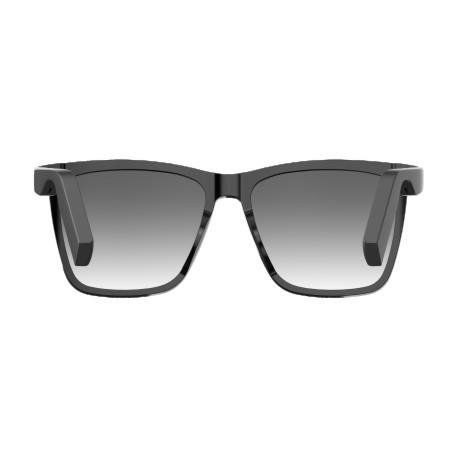
Ready to discuss your AI-enabled smart glasses project with experienced manufacturing professionals? Our team supports B2B partners worldwide, providing technical consultation, prototype development, and scalable production services for next-generation eyewear products.
