
Posted At: Nov 19, 2026 - 45 Views

The wearable technology landscape is undergoing a fundamental shift. Voice-powered AI assistants embedded directly into smart glasses are no longer theoretical concepts or prototypes gathering dust in research labs. They have arrived as commercial products, and the implications for brands, distributors, and B2B procurement teams are substantial. Understanding this technology, its market trajectory, and where to source reliable manufacturing partners has become essential for anyone operating in or entering this space.
Smart glasses with integrated AI represent more than an incremental improvement over existing devices. They fundamentally change how users interact with information, their environment, and digital services. When your computing interface sits inches from your eyes and responds to natural speech, workflows transform across industries from logistics to healthcare, from retail to manufacturing.
Understanding Voice-Powered AI in Wearable Eyewear
At its core, voice-powered AI in smart glasses combines several technological layers. Microphone arrays capture user speech with sufficient clarity for processing. On-device or cloud-based speech recognition converts audio to text. Natural language processing interprets intent and context. AI models generate appropriate responses or actions. Finally, the eyewear delivers output through bone-conduction speakers, directional audio, or visual displays embedded in the lenses.
The result is a hands-free, eyes-free computing experience that keeps users grounded in their physical environment while accessing vast computational resources. Unlike smartphones that demand visual attention and at least one free hand, voice-powered smart glasses integrate seamlessly into workflows where users need both hands and continuous environmental awareness.
Major technology companies have intensified their investments in this segment. The convergence of improved speech recognition accuracy, more powerful edge-processing chips, and mature AI language models has created the technical foundation for consumer-ready products. What once required bulky hardware and unreliable recognition now fits into frames that look remarkably similar to conventional eyewear.
Key Features Driving Commercial Adoption
Modern voice-powered smart glasses incorporate features that address real consumer and professional needs. These capabilities directly influence purchasing decisions and market demand:
- Always-available voice activation through wake words that work in challenging acoustic environments
- Multilingual support enabling global market reach without hardware modifications
- Contextual awareness allowing AI assistants to understand what the user is looking at or discussing
- Private processing options for sensitive enterprise applications requiring data sovereignty
- Extended battery life achieved through efficient edge AI processing rather than constant cloud connectivity
- Prescription lens compatibility expanding addressable market beyond users with perfect vision
Manufacturers offering OEM and ODM services must demonstrate proficiency across these feature areas. The ability to integrate multiple AI assistants, customize wake words, and configure processing pipelines for specific regional requirements distinguishes capable manufacturing partners from basic assembly operations.
Market Applications and Industry Verticals
Voice-powered smart glasses serve diverse market segments, each with distinct requirements that influence product specifications and manufacturing priorities.
Logistics and Warehouse Operations
Hands-free inventory management, voice-directed picking, and real-time overlay of routing information reduce errors and increase throughput in distribution centers. Workers confirm shipments, locate products, and update systems without pausing their physical tasks. The productivity gains in high-volume logistics environments generate compelling return-on-investment calculations that drive enterprise adoption.
Healthcare and Medical Settings
Clinical documentation captured through voice reduces administrative burden on physicians and nurses. Hands-free access to patient records during examinations, voice-to-text notes, and remote expert consultation through shared visual feeds address genuine workflow pain points in healthcare delivery. Stringent privacy requirements in medical contexts demand manufacturing partners who understand compliance and secure data handling.
Field Service and Maintenance
Technicians working on complex equipment benefit from augmented reality overlays showing schematic information while their hands remain free to manipulate tools. Voice commands allow accessing specific procedures without interrupting work. Remote support teams see what the field technician sees and can provide real-time guidance. These applications span automotive, aerospace, telecommunications, and industrial maintenance sectors.
Retail and Hospitality
Customer-facing staff equipped with voice-powered smart glasses access inventory systems, compare products, and retrieve specifications without turning away from shoppers. Concierge services can pull up guest preferences and history while maintaining eye contact and attentive body language. The personal touch advantage of human interaction combines with the information advantages of digital systems.
Manufacturing Considerations for B2B Buyers
For brands and distributors sourcing voice-powered smart glasses, understanding manufacturing capabilities separates successful product launches from costly delays. Several factors merit careful evaluation during partner selection.
Audio engineering expertise stands as perhaps the most critical differentiator. Achieving reliable voice recognition in glasses-form-factor devices presents unique acoustic challenges. Microphone placement, beamforming algorithms, wind noise rejection, and speaker isolation all require specialized knowledge. Partners who have navigated these challenges across multiple product generations possess institutional knowledge that accelerates development timelines and improves first-pass yield rates.
AI integration capabilities determine how effectively your smart glasses leverage voice assistant technology. Some manufacturers offer pre-validated integrations with leading AI platforms, reducing certification overhead and compatibility concerns. Others require more custom development work, extending timelines but offering greater differentiation potential.
Supply chain stability for specialized components including directional speakers, miniature microphones, and low-power AI processors affects production reliability. Manufacturers with diversified supplier relationships and strategic inventory management demonstrate resilience against component shortages that have disrupted the broader electronics industry.
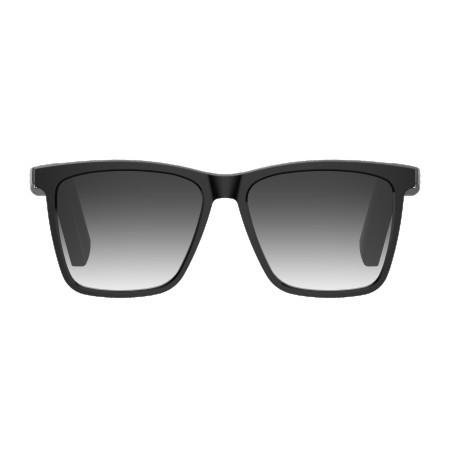
Competitive Landscape and Differentiation Opportunities
The smart glasses market includes technology giants with massive R&D budgets alongside specialized manufacturers building for specific market segments. This creates a bifurcated opportunity for B2B buyers. Products from major technology companies establish market legitimacy and fund consumer education, but often limit customization and brand control. Manufacturing partners offering greater flexibility enable differentiated products that escape the commodity trap.
Vertical-specific solutions present compelling differentiation opportunities. Rather than general-purpose voice assistants, designing glasses specifically optimized for logistics workflows, medical documentation, or field service creates defensible market positions. Manufacturing partners capable of co-development rather than simple assembly enable these specialized approaches.
Geographic market targeting also influences product requirements. Markets with high ambient noise levels demand superior audio processing. Regions with strong privacy regulations require on-device processing architectures. Markets where prescription eyewear is predominantly insurance-funded need seamless insurance verification integration. Manufacturing partners who understand these regional nuances provide valuable guidance during product definition.
Cost Structures and Pricing Dynamics
Voice-powered smart glasses span a wide price spectrum, from budget models under fifty dollars to enterprise solutions exceeding five hundred dollars. Understanding what drives these cost differences helps B2B buyers establish realistic expectations and appropriate margins.
| Component Category | Budget Tier | Mid-Market | Enterprise |
|---|---|---|---|
| Frame and Optics | Injection-molded plastic | TR-90 or aluminum | Premium materials, prescription |
| Audio System | Basic directional speakers | Multi-microphone array | Advanced beamforming, ANC |
| Processing | Cloud-dependent | Hybrid edge/cloud | On-device AI processing |
| Battery | Limited to hours | Full workday | Extended with hot-swap |
| AI Assistant | Basic voice commands | Natural language support | Contextual AI, customization |
Manufacturing partners offering complete solutions can provide value engineering guidance that optimizes cost-performance ratios for specific market positioning. The goal is not always minimizing cost but achieving the right cost structure for target margins and competitive positioning.
Development Timeline and Commercialization Path
Moving from concept to commercial product involves several phases, each with associated timelines and milestones. Understanding these phases helps B2B buyers plan go-to-market strategies and allocate resources appropriately.
Initial product definition typically spans four to eight weeks, depending on customization requirements. During this phase, manufacturing partners provide technical feasibility assessment, component recommendations, and preliminary cost modeling. Rushing this phase often leads to expensive changes later, while excessive delays risk missing market windows.
Prototype development generally requires twelve to sixteen weeks for sophisticated voice-powered devices. This phase includes acoustic optimization, AI integration, and fit testing. Each iteration builds confidence in the final product while identifying potential production challenges early.
Certification and compliance testing varies by target market but typically requires eight to twelve weeks for major market approvals. Voice-activated devices may require specific radio certifications, safety testing, and AI transparency disclosures depending on applicable regulations.
Initial production runs normally start at five hundred to one thousand units, scaling to higher volumes as market validation confirms demand. Manufacturing partners with flexible production capabilities accommodate these scaling patterns without requiring massive upfront commitments.
Future Technology Trajectories
The voice-powered smart glasses category continues rapid evolution. Several technology developments will reshape competitive dynamics and market opportunities in the coming years.
On-device AI processing capabilities are expanding dramatically. Chips purpose-built for neural processing enable sophisticated voice recognition and natural language understanding without cloud connectivity. This architectural shift improves privacy, reduces latency, and enables reliable operation in connectivity-challenged environments. Manufacturing partners who have already designed for these architectures will bring products to market faster than those still dependent on cloud-centric designs.
Multimodal AI integration represents the next frontier. Voice assistants that simultaneously process visual input, spatial context, and conversation history deliver substantially more capable experiences than voice-only systems. Smart glasses provide the ideal platform for these multimodal experiences since the device inherently captures both audio and visual information from the user's perspective.
Battery technology improvements, though incremental, continue extending operational time between charges. Solid-state batteries and more efficient processors contribute to devices that can support full workday operation without midday charging interruptions.
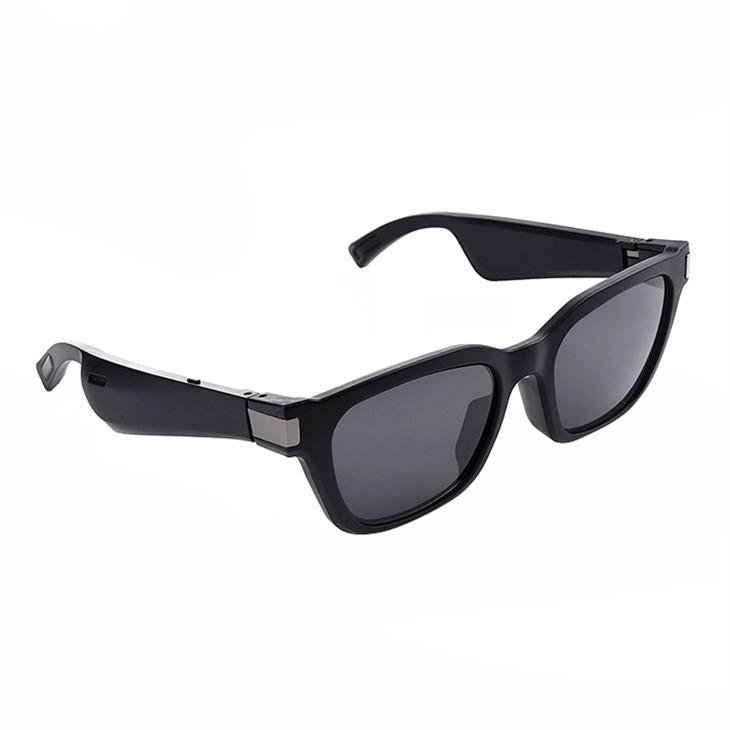
Partner Selection Criteria
Choosing the right manufacturing partner for voice-powered smart glasses requires evaluating multiple dimensions beyond unit cost. The following criteria consistently distinguish excellent partners from problematic alternatives.
Technical depth in acoustic engineering signals manufacturing maturity. Ask potential partners about microphone array design experience, beamforming algorithm development, and speaker integration challenges they have solved. Partners who can articulate specific technical problems they encountered and solved demonstrate genuine expertise rather than assembly capabilities.
AI platform relationships indicate market validation and integration efficiency. Partners with established relationships with major AI providers have already navigated integration complexities and can leverage existing certifications and compatibility testing. These relationships also provide access to component pricing and availability that individual brands cannot match.
Quality systems and certification experience reduce market entry friction. Manufacturing partners with ISO certifications, CE and FCC testing experience, and demonstrated quality management systems accelerate time to market while reducing compliance risk. For enterprise buyers, these credentials also satisfy internal procurement requirements.
Communication practices during development predict partnership quality. Partners who provide regular updates, proactive problem notification, and clear escalation paths create collaborative relationships that produce superior products. This soft factor often determines whether development projects stay on schedule and budget.
Strategic Recommendations for B2B Decision Makers
For brands and distributors evaluating voice-powered smart glasses opportunities, several strategic considerations should guide decision-making.
Start with clear use case definition. Whether targeting enterprise logistics applications or consumer lifestyle products, specific use case clarity shapes every subsequent decision from component selection to pricing strategy. Attempting to serve all markets with one product typically serves none well.
Invest appropriately in product definition. The most expensive mistakes occur when vague requirements enter development. Detailed specification documents reviewed against manufacturing capabilities prevent scope creep and misalignment that derail projects.
Plan for iteration and improvement. First-generation products rarely achieve all objectives. Building relationships with manufacturing partners who support continuous improvement rather than one-time transactions creates sustainable competitive advantage through accumulated product refinement.
Consider total cost of ownership rather than unit cost alone. Quality issues, certification surprises, and supply disruptions cost far more than modest unit cost differences from higher-quality manufacturing partners. The cheapest initial quote often generates the highest total cost when downstream consequences materialize.
The voice-powered smart glasses market offers substantial opportunities for brands positioned to serve growing demand across enterprise and consumer segments. Success requires manufacturing partners who combine technical depth in audio engineering and AI integration with operational excellence in quality and supply chain management. Evaluating partners against these criteria positions B2B buyers to capitalize on the voice-powered future rather than simply observe it.
Ready to explore manufacturing partnerships for voice-powered smart glasses? Our team provides detailed technical consultations and custom development quotes for brands and distributors seeking differentiated products in this growing category. Share your product requirements and market objectives to receive tailored recommendations from experienced smart glasses manufacturing specialists.
Explore our Bluetooth smart glasses product line featuring advanced audio integration and voice assistant compatibility, or browse our UV protection collection combining sun safety with integrated audio capabilities for lifestyle applications.
